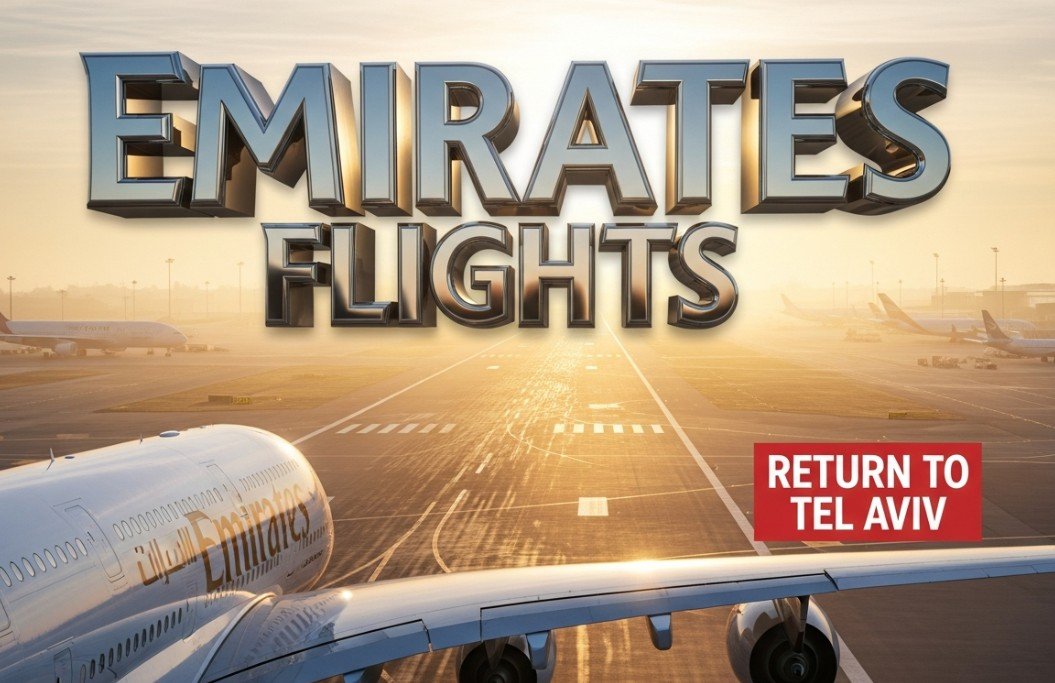
Emirates Airlines is reportedly preparing to restart flights to Tel Aviv in early 2026 following a nearly two-year break that began amid geopolitical unrest in the Middle East. The potential resumption comes as regional tensions ease in some areas and reflects ongoing diplomatic and commercial interests between the United Arab Emirates and Israel. However, official confirmation from Emirates remains cautious.
The possible restart has captured global travel and diplomacy attention, offering a glimpse into shifting dynamics in Middle East aviation and wider ties between the two countries since the Abraham Accords opened diplomatic and economic avenues in 2020.
What the Latest Reports Say About Emirates and Israel Flights
Several major international outlets are reporting that Emirates, the UAE’s flagship carrier and one of the world’s busiest international airlines, is in discussions to resume service to Tel Aviv’s Ben-Gurion Airport as early as the first quarter of 2026. This follows a suspension in October 2023 triggered by the outbreak of conflict in the region.
However, the airline itself has pushed back on claims of firm plans to restart the Tel Aviv route. A spokesperson emphasized that flights to and from Tel Aviv remain suspended and no official restart has been announced. Emirates has underscored that any decision will depend on evolving conditions and operational readiness.
Israeli media reported that during high-level meetings UAE officials signaled willingness to resume operations, though concrete timelines remain tentative. Discussions reportedly included preserving landing and takeoff slots at Ben-Gurion Airport, an important logistical factor for future scheduling.
How the Suspension Shifted Middle East Air Travel Patterns
Before the suspension in late 2023, Emirates had established a strong presence between Dubai and Tel Aviv, with multiple daily flights that helped connect business travelers, tourists, and the large expatriate communities between the two cities.
Once Emirates halted its flights due to security concerns, other carriers filled much of the gap. Airlines such as flydubai continued direct service, while several European carriers, including Dutch airline KLM, paused and later resumed routes to the region depending on changing assessments of safety and airspace restrictions.
Recent aviation advisories have also pointed to broader impacts on Middle East routes. Some carriers have adjusted schedules, rerouted around certain airspace zones, or issued warnings to passengers about potential delays due to ongoing geopolitical factors, particularly around Iranian airspace.
Why This Matters for Israel, UAE, and Global Aviation
Resuming Emirates flights to Tel Aviv holds both economic and symbolic significance.
-
Economic and travel impact: Direct Emirates service would boost tourism, business travel, and trade links between Israel and the UAE, complementing the broader economic cooperation built since the Abraham Accords were signed in 2020.
-
Symbolic diplomatic step: Emirates was one of the most visible commercial representations of the thawing of relations under the Accords. A return to the route would signal resilience of diplomatic ties despite regional tensions.
-
Operational considerations: Airlines track not just demand but safety conditions. Given recent flight disruptions and advised avoidance of certain airspace corridors, any resumption will be carefully calculated, balancing passenger confidence and regulatory guidance.
Airline industry analysts note that if Emirates does reinstigate Tel Aviv flights, it could lead other carriers to eye similar route expansions, strengthening overall connectivity across the Middle East. However some airlines remain cautious and have kept their own Israel services flexible as conditions evolve.
How Travelers Are Responding
Passengers and frequent flyers have reacted to the potential news with mixed feelings:
-
Hope for convenience: Travelers who once relied on Emirates’ premium network are anticipating easier connections between Europe, Asia, and Israel without routing through secondary carriers.
-
Security concerns linger: Some frequent flyers have expressed caution, noting that surface stability must persist for sustained confidence in resuming flights.
-
Codeshare options: Emirates currently offers indirect connections via its partner flydubai, a strategy that has kept Dubai-Israel links alive even without direct Emirates flights.
Airline and travel forums have been active as enthusiasts share updates, discuss ticket availability and speculate on potential launch dates once official announcements are made.
What Comes Next in the Aviation Landscape
Despite mixed statements from official sources, the broader trend in the region suggests a gradual normalization and reinstatement of international routes contingent on peace and stability improvements. Dubai remains one of the world’s busiest long-haul hubs, and fully restored service to Tel Aviv would strengthen economic ties and reinforce Dubai’s strategic role in global aviation.
Observers will be closely watching announcements over the coming weeks as Emirates assesses risk, market demand and geopolitical developments. A formal confirmation, including flight schedules and ticket sales, is expected to follow once conditions are deemed suitable by both the airline and regulatory authorities.
Public anticipation remains high that direct Emirates flights will return between Tel Aviv and Dubai, a route that once served as a key pillar of Israel-UAE connectivity.