
The immediate aftermath of October 7 saw a historic wave of solidarity between Israel and the global Jewish community. Planes packed with supplies landed in Tel Aviv while rallies filled capitals across the West. But as the war grinds on, a quiet yet profound silence is growing between these two pillars of the Jewish world.
It is a disconnect born not of malice but of radically different lived experiences. While Israelis fight a physical war for sovereign survival, Diaspora Jews are fighting a social war for their identity. This growing gap threatens to reshape the relationship between the Jewish state and its global family long after the cannons go quiet.
Two Different Wars on the Same People
The core of this disconnect lies in the nature of the threat each community faces. For Israelis, the trauma is tangible and bloody. It is measured in funerals, hostage counts, and the terrifying sound of sirens. The danger is existential in a literal sense.
Diaspora Jews face a different kind of siege. Their battleground is the university campus, the corporate boardroom, and the social media feed. They are grappling with a 360-degree rise in antisemitism that makes them feel unsafe in cities they have called home for generations.
Israelis often struggle to understand why Jews abroad do not just pack up and move to Israel. To a resident of Kibbutz Be’eri or Tel Aviv, living as a minority in a hostile environment seems illogical.
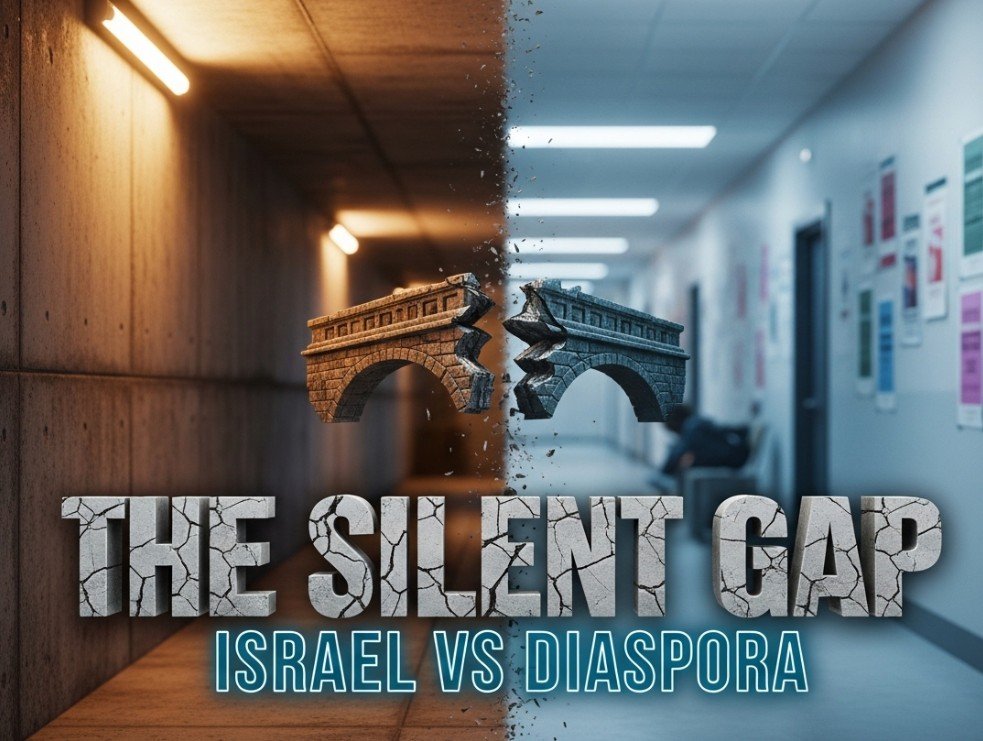
Conversely, many American and European Jews cannot fully grasp the daily existential dread of living within rocket range. The war in Gaza is a headline for them. For Israelis, it is a morning reality check to see who died overnight.
The Statistics of Separation
- In Israel: Over 200,000 citizens were internally displaced from their homes in the north and south.
- In the US: The ADL reported a 140% spike in antisemitic incidents in 2023 alone compared to the previous year.
- The Result: Both communities feel like the primary victim, making it hard to fully validate the other’s pain.
The Campus Protests vs The Northern Border
The visibility of the conflict has created a strange mirror effect. Israelis watch news of Ivy League protests with horror. They see students chanting slogans that call for the destruction of their state. They feel abandoned by the very liberal institutions that American Jews supported for decades.
This sense of betrayal has hardened Israeli hearts against the West.
Meanwhile, Diaspora Jews are being asked to answer for every military action taken by the IDF. A Jewish student at Columbia University is demanded to justify airstrikes in Rafah while trying to study for a math exam. They are forced into the role of unpaid ambassadors for a government they may not even support.
This creates a “fatigue of defense.” Many Jews abroad are tired of explaining Israel’s security needs to neighbors who see only humanitarian crisis images on TikTok. They feel the weight of global public opinion in a way Israelis inside the “bubble” of war do not.
Politics and Policy Create New Walls
The political divide is perhaps the most dangerous crack in the foundation. The current Israeli leadership has moved significantly to the right. This shift often clashes with the largely liberal values of the American Jewish majority.
Before the war, this was a debate about judicial reform or religious pluralism. Now, it is about the conduct of war and the vision for “the day after.”
Surveys show a sharp divergence in how young American Jews view the war compared to their Israeli peers.
Younger Jews in the Diaspora are asking hard questions about morality and proportionality. They face intense peer pressure to denounce Zionism. Israelis of the same age are serving in reserve units in Gaza and see these questions as a luxury of those who are not under fire.
This lack of shared language is critical. When an Israeli says “Never Again,” they mean they need a strong army to prevent slaughter. When a liberal American Jew says “Never Again,” they often mean preventing human suffering universal terms.
Finding a Common Language Again
The gap is not unbridgeable, but it requires a change in how the two communities talk. The era of blind checks and superficial “solidarity missions” may be ending.
Real relationships require honest conversations about these divergent realities. Israelis need to acknowledge that antisemitism abroad is a genuine threat to Jewish survival, not just a marketing tool for Aliyah.
Diaspora leaders must educate their communities on the visceral, physical fear that drives Israeli security policies. It is not just politics. It is the fear of annihilation.
We are seeing new initiatives rise to fix this. Grassroots groups are moving away from political advocacy and toward personal connection. They are focusing on shared grief and shared resilience rather than agreeing on every government policy.
The future of Jewish peoplehood depends on this nuance. We cannot let geography and trauma turn us into strangers. We must recognize that we are fighting the same battle, just on very different fronts.
