Israel and Germany have agreed to significantly expand cooperation on counterterrorism and cyber defence, sending a pointed signal of strategic alignment as tensions with Iran and its regional allies continue to intensify.
The new declaration, signed in Jerusalem, places security coordination at the centre of bilateral relations between the two countries at a volatile moment for the Middle East.
A declaration shaped by shared threat perceptions
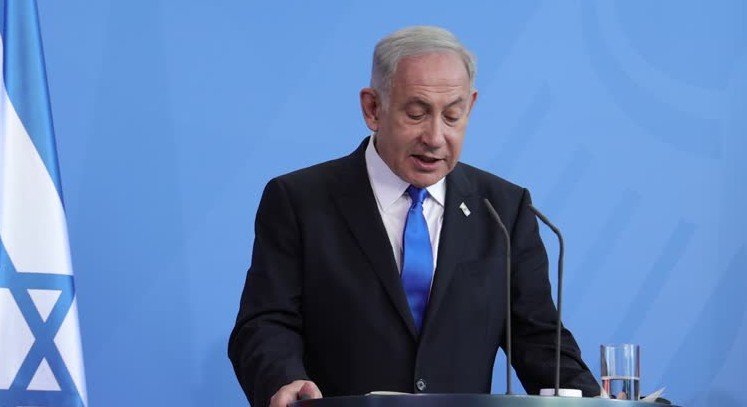
Prime Minister Benjamin Netanyahu and visiting German Interior Minister Alexander Dobrindt signed the joint declaration on Sunday, formalising what officials described as a deepening partnership between the security establishments of both nations.
According to a statement from Netanyahu’s office, the agreement is rooted in common concerns over Iran and the network of armed groups it supports across the region.
Those groups, the statement said, pose risks well beyond Israel’s borders.
Netanyahu’s language was unmistakably direct.
Israel’s enemies, he warned, should understand that “our eyes are on them at all times and everywhere.”
Counterterrorism and cyber defence take centre stage
The declaration anchors cooperation across several sensitive domains.
Chief among them are counterterrorism operations, cyber security, and advanced technologies. While specific operational details were not made public, officials indicated that intelligence sharing and technical collaboration will be expanded.
Cyber defence has taken on particular urgency as state-backed hacking, sabotage, and digital espionage increasingly blur the line between civilian and military targets.
Both countries have faced growing cyber threats, and officials say closer coordination is no longer optional.
It is, as one Israeli official put it privately, a matter of resilience.
Iran and its allies dominate the security calculus
In outlining the rationale for the agreement, Netanyahu’s office explicitly named Iran and several allied groups.
Those included Hezbollah, Hamas, and the Houthis.
Israel has long argued that these actors operate as part of a broader Iranian strategy to encircle and pressure the country militarily and politically. Germany, while geographically distant, has increasingly echoed concerns about Iran’s regional role and its implications for European security.
The declaration reflects that convergence.
It also comes as Iran faces sustained internal unrest, adding another layer of unpredictability to regional dynamics.
A partnership with a military backbone
Netanyahu described Germany and Israel as “natural partners,” pointing to years of defence cooperation.
One of the most prominent examples is the Arrow 3 anti-ballistic missile defence system, an Israeli-developed platform created with US support. Germany last month approved a $3.1 billion expansion of its contract for the system.
Originally signed in 2023, the deal is now valued at approximately $6.5 billion, making it Israel’s largest military export contract to date.
For Berlin, the purchase represents a major upgrade to its air and missile defence capabilities. For Jerusalem, it reinforces Israel’s position as a global defence technology supplier.
Formalising what already existed
While cooperation between Israel and Germany is not new, officials say the declaration gives political and institutional weight to an already close relationship.
Security agencies from both countries have worked together for years, often quietly. The new framework is meant to streamline that cooperation and ensure continuity regardless of political changes.
According to the Israeli statement, the initiative creates structured channels between security apparatuses, rather than relying solely on ad hoc coordination.
In diplomatic terms, this is about durability.
Parallel diplomacy with Israel’s foreign ministry
Earlier on Sunday, Israeli Foreign Minister Gideon Saar held talks with Dobrindt, widening the scope of the visit.
During those discussions, Saar urged the European Union to designate Iran’s Islamic Revolutionary Guard Corps as a terrorist organisation.
That call has circulated in European capitals before, but resistance remains among some EU members concerned about escalation.
Still, the renewed push underscores how central Iran has become to Israel’s diplomatic agenda in Europe.
Germany’s balancing act remains visible
The visit also highlighted areas of tension.
Just two days earlier, Germany had publicly called on Israel to halt its controversial E1 settlement project in the West Bank, warning that construction could increase instability and undermine prospects for a political solution.
That message underscores Berlin’s effort to balance strong security ties with Israel against criticism of certain Israeli policies.
For Israeli officials, the contrast is familiar.
Strategic cooperation, they argue, can coexist with political disagreement.
Why this moment matters
The timing of the declaration is notable.
Iran has been rocked by deadly protests, initially triggered by economic grievances and later evolving into broader opposition to the ruling system established after the 1979 revolution. The unrest has heightened uncertainty about Tehran’s next moves, both domestically and abroad.
Israel has accused Iran of externalising pressure through its regional proxies during periods of internal strain.
Germany, meanwhile, is reassessing its own security posture, from missile defence to cyber resilience.
In that context, coordination with Israel serves both symbolic and practical purposes.
A message beyond Jerusalem
Netanyahu’s statement was clearly crafted for a wider audience.
By framing the declaration as a warning to Israel’s enemies, he sought to project deterrence not just regionally, but internationally. The idea is to signal vigilance, reach, and alignment with a major European power.
For Germany, the message is more understated but no less significant.
Berlin is positioning itself as an active security actor, willing to engage closely with partners facing direct threats.
What comes next remains opaque
Neither side detailed timelines or specific initiatives that will follow the declaration.
Security cooperation of this kind tends to unfold quietly, through joint working groups, intelligence exchanges, and technical projects that rarely make headlines.
What is clear is that the agreement adds another layer to Israel–Germany relations at a time when the Middle East is anything but stable.
As Iran’s regional role continues to dominate strategic thinking in Jerusalem and beyond, partnerships like this are likely to multiply.