
A false and inflammatory claim shared by a former senior Argentine military official has ignited political backlash and deepened social tensions, as wildfires continue to burn across southern Patagonia and authorities scramble to contain both the flames and the fallout.
The allegation, widely condemned as antisemitic, accused Israelis of deliberately starting a devastating blaze using military explosives, despite no evidence supporting the claim.
Wildfires provide backdrop for misinformation
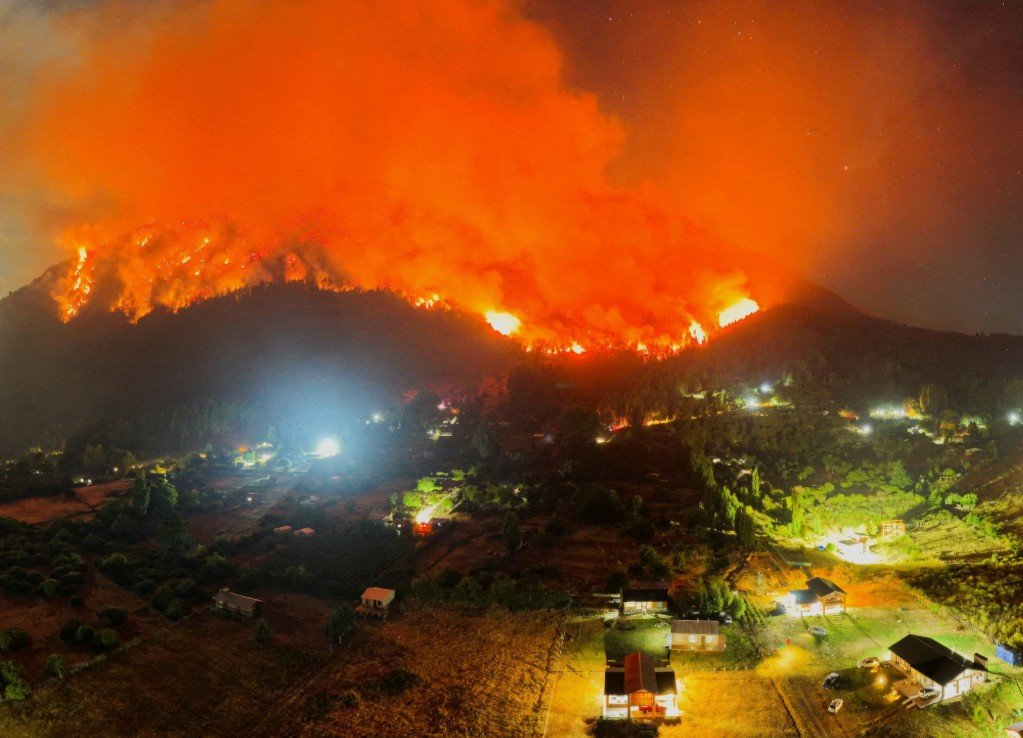
Southern Argentina has been battling severe wildfires, with thick smoke and fast-moving flames cutting through parts of Patagonia.
One of the hardest-hit areas has been El Hoyo, a town in Chubut province, where fires forced evacuations and damaged homes, farmland, and infrastructure. Images published by Reuters on January 9 showed towering smoke plumes and advancing fire lines, underscoring the scale of the emergency.
Firefighters and emergency services say dry conditions and strong winds have complicated containment efforts.
In moments like this, officials often urge caution. Instead, the crisis became a platform for conspiracy.
Cesar Milani’s post sparks outrage
On Sunday, Cesar Milani, Argentina’s former army deputy chief of staff, shared a post blaming the wildfires on what he described as “a foreign State,” alleging that two Israelis used a grenade from the Israel Defense Forces to ignite the fire.
The post included an image of Argentine President Javier Milei waving an Israeli flag, a clear visual cue despite Milani stopping short of explicitly naming Israel.
No evidence was provided. Authorities investigating the fires have not suggested sabotage, let alone foreign involvement.
The claim spread quickly online, amplified by several opposition-linked accounts, before drawing sharp condemnation.
Jewish leaders respond forcefully
The reaction from Argentina’s Jewish community was immediate and angry.
Waldo Wolff, a legislator in the Buenos Aires city assembly and a prominent Jewish community figure, publicly condemned Milani’s remarks.
Wolff described Milani as “a coward,” arguing that the former general attempted to mask antisemitism by using vague language rather than naming Israel directly.
According to Wolff, the post revived old tropes that blame Jews or Israelis for disasters, especially during moments of fear or instability.
Those patterns, he warned, have real-world consequences.
A familiar pattern during crises
Analysts say the episode fits a broader pattern seen during natural disasters, when uncertainty creates space for rumors and scapegoating.
Wildfires, floods, and pandemics have repeatedly been followed by conspiracy theories that assign blame to outsiders, minorities, or shadowy forces. In Argentina’s case, political polarization and the visibility of Milei’s strong alignment with Israel have added fuel.
Experts on extremism note that antisemitic narratives often surface during national stress, even when the crisis has clear environmental or climatic causes.
This time was no different.
Political undertones sharpen the controversy
Milani’s post did not emerge in a vacuum.
President Milei has made his pro-Israel stance a defining feature of his foreign policy, drawing both praise and criticism at home. That positioning has become a lightning rod for opposition figures seeking to challenge his broader agenda.
By pairing wildfire accusations with an image of Milei waving an Israeli flag, critics say Milani was sending a political message as much as spreading a conspiracy.
The implication, they argue, was deliberate.
Authorities reject sabotage claims
Argentine authorities investigating the Patagonia fires have not indicated any evidence of arson tied to foreign actors.
Officials say the fires appear consistent with seasonal wildfire patterns worsened by heat, drought, and wind. Several blazes across the region have been linked to natural causes or local human activity, such as unattended burns.
No arrests related to the claims circulated online have been announced.
Government sources privately expressed frustration that misinformation could distract from emergency response and recovery efforts.
Social media amplification raises concerns
The speed with which the false accusation spread has renewed debate about social media’s role during emergencies.
Posts shared by well-known figures, even former officials, tend to carry weight regardless of accuracy. When claims tap into existing prejudices, they can spread faster than official corrections.
Community leaders have urged platforms to respond more quickly to content that promotes hate or false allegations during crises.
So far, some posts have been taken down, while others remain accessible.
Broader implications for Argentina’s social fabric
Argentina is home to Latin America’s largest Jewish population, a community with deep historical roots and a long memory of antisemitic violence, including the 1994 AMIA bombing.
Incidents like this, Jewish leaders say, reopen old wounds and raise fears about normalization of hateful rhetoric.
They also worry about copycat narratives during future crises.
For many, the concern is not just one post, but what it signals about public discourse.
A wildfire crisis complicated by words
As firefighters continue battling flames in Patagonia, residents face displacement, loss, and uncertainty.
Into that already painful situation came an accusation that shifted attention away from relief and recovery.
Natural disasters test institutions. They also test societies.
In this case, Argentina is confronting not only environmental damage, but the consequences of misinformation and prejudice layered on top of tragedy.
