Egypt has moved ahead with a fresh phase of its long-running plan to restore the historic heart of its capital, launching the fourth stage of the Khedivial Cairo revitalization project. The new phase stretches from 26th of July Street to Talaat Harb Square, bringing another slice of Downtown Cairo into the spotlight.
Officials say the goal is simple but serious: protect the past, fix the present, and keep the area alive for the future.
Restoring a district that shaped modern Cairo
Known formally as Khedivial Cairo, Downtown Cairo carries the imprint of late 19th and early 20th century urban planning. It was designed as a modern capital district, inspired by European city centers, yet adapted to Egypt’s own rhythms and climate.
Over the decades, time took its toll.
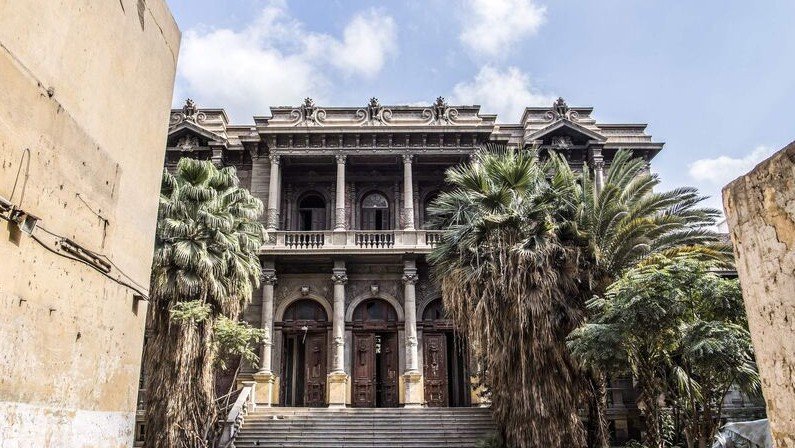
Buildings faded. Facades cracked. Visual clutter crept in. The district’s original harmony was slowly buried under mismatched signage, ad hoc renovations, and neglect.
This fourth phase targets a key corridor linking 26th of July Street to Talaat Harb Square, an area dense with heritage buildings, commercial life, and daily foot traffic. Officials involved in the project say restoring this stretch is essential to reconnecting Downtown’s urban fabric.
The focus, they insist, is not cosmetic fixes alone. It is about recovering the character that once made the area a symbol of Cairo’s modern identity.
Architecture, streets, and the visual rhythm of the city
At street level, the work is highly visible.
Crews are restoring building facades in line with their original designs, removing visual noise, and standardizing storefront elements to bring back a sense of order. Pavements are being upgraded. Lighting is being redesigned to highlight architectural details instead of washing them out.
One planner involved in the project described it as “letting the buildings speak again.”
The aim is to preserve architectural style without freezing the district in time. Structures are reinforced, utilities upgraded, and safety standards applied, but always with an eye on the original look and feel.
There is also an effort to rebalance public space.
Narrow sidewalks that once pushed pedestrians into traffic are being reworked. Street furniture is being added carefully, nothing flashy, nothing loud. The idea is to create an environment that feels lived-in, not staged.
Basically, the streets should work for people who pass through them every day, not just for postcards.
Culture, crafts, and everyday commerce
Beyond bricks and balconies, the project places real weight on economic life.
Officials say supporting traditional crafts and long-standing commercial activities is a core pillar of the fourth phase. Downtown Cairo has always been a place where workshops, bookstores, cafés, and small retailers coexist side by side.
That mix matters.
Rather than pushing out existing businesses, planners say the goal is to help them operate in a cleaner, safer, more attractive setting. Restored storefronts, improved signage, and better pedestrian flow are expected to boost foot traffic without turning the area into a closed-off tourist zone.
The project also includes rehabilitation of sites with historical and archaeological value scattered across the district. Some are well known. Others are easy to miss unless you know where to look.
One sentence keeps coming up in official briefings: Downtown should feel welcoming, not museum-like.
And that distinction shapes how decisions are made on the ground.
Investment, tourism, and a living city model
Authorities involved in the revitalization argue that heritage protection and economic growth do not have to clash.
By improving the urban environment, the project is expected to enhance investment opportunities, particularly in hospitality, retail, and cultural industries. Restored buildings can attract tenants who value location and identity, while improved streetscapes raise overall property appeal.
There is also a clear tourism angle.
Downtown Cairo sits at the crossroads of history and daily life in Cairo. Officials believe that a revitalized Khedivial Cairo can serve as a cultural destination in its own right, offering visitors a walkable experience that connects architecture, cafés, galleries, and historic landmarks.
Yet planners stress that tourism is not the only metric.
Success, they say, will be measured by whether residents, workers, and shop owners feel the district is easier to use, safer to move through, and more pleasant to spend time in. A city center that empties out after sunset is not the goal.
The project is being positioned as a working model, one that blends authenticity with present-day urban standards, without tipping too far in either direction.
A longer story still being written
The launch of the fourth phase signals that the Khedivial Cairo project is far from symbolic. It is iterative, slow in places, and sometimes messy, but it is moving.
Officials acknowledge challenges. Coordinating restoration across dozens of buildings, multiple agencies, and active commercial streets is never smooth. Balancing preservation with daily economic pressures tests every decision.
Still, momentum appears to be building.
Each completed phase feeds into the next, gradually stitching together a district that once felt fragmented. The stretch from 26th of July Street to Talaat Harb Square is expected to act as another connective piece, strengthening the continuity of the downtown area.
For many Cairenes, the changes are personal.
These streets are where people worked, protested, met friends, and built routines. Bringing them back to life, without sanding away their rough edges, is a delicate act.
The fourth phase does not promise perfection. What it promises is attention, investment, and a clear signal that Downtown Cairo’s story is not over.