After a violent end to last year in southern Yemen, political leaders and ordinary citizens are now looking to Riyadh for answers. Saudi-hosted dialogue talks are being billed as a chance to cool tensions, reset fractured alliances, and perhaps steady a region that feels permanently on edge.
Last December did not close quietly in Yemen. Instead, it ended with gunfire, power struggles, and growing fear in the country’s southern and eastern governorates, leaving many Yemenis asking whether politics could still outrun the pull of weapons.
A December escalation that rattled the south
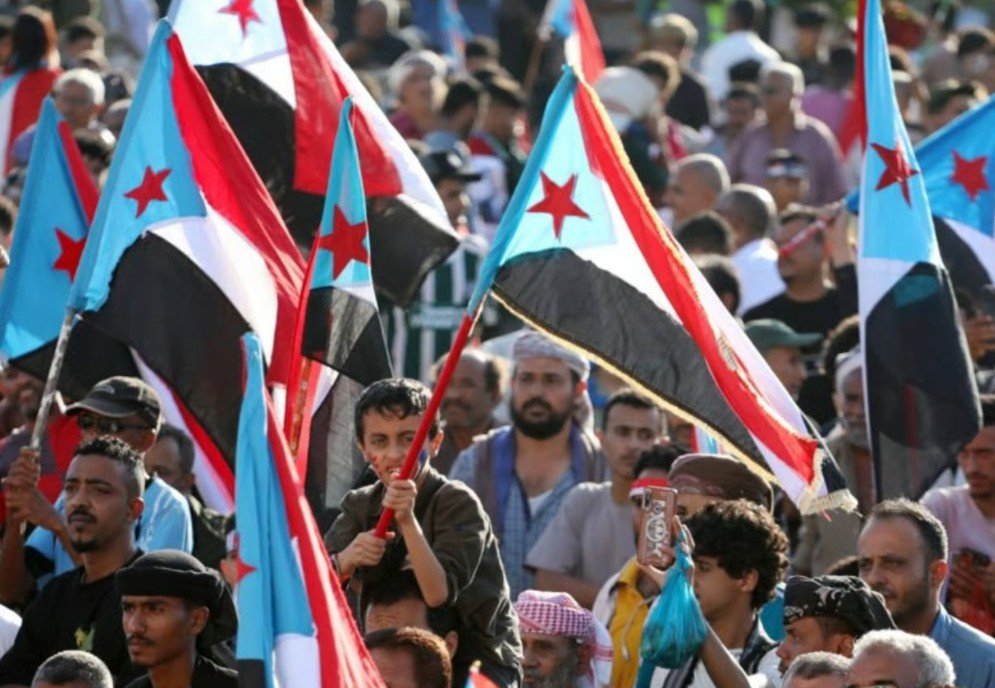
The latest crisis was triggered when the Southern Transitional Council, led by Aidarous Al-Zubaidi, moved to seize state institutions and military camps in parts of southern Yemen.
The push went beyond previous political maneuvering. Armed units advanced in Hadramout and Al Mahra, areas that had largely avoided large-scale violence compared to other fronts.
Clashes followed, leaving casualties and deepening mistrust between southern factions and the internationally recognized government.
One short line captures the mood at the time. The south felt like it was slipping.
The STC’s actions were widely seen as a direct challenge to Yemen’s fragile political balance, especially as they appeared to defy expectations of restraint in regions known for their tribal and political sensitivities.
Government response and appeals to Riyadh
In the days that followed, Yemen’s political leadership moved quickly on paper, if not always on the ground.
Officials appealed to the Saudi-led coalition to contain the situation and restore calm. They also called for the withdrawal of Emirati forces, reflecting long-standing unease over outside involvement in southern affairs.
At the same time, government-aligned units launched operations aimed at reasserting control over military headquarters in Hadramout and Al-Mahra.
It was a messy response, and everyone knew it.
Behind the scenes, there was a growing sense that military fixes alone would not hold, especially with southern grievances simmering and rival forces entrenched.
Why the Riyadh dialogue matters now
Against that backdrop, Rashad Mohammed Al-Alimi, head of Yemen’s Presidential Leadership Council, formally asked Saudi Arabia to host a comprehensive dialogue in Riyadh.
The idea is simple, at least on paper.
Bring all southern factions to one table. Talk through grievances. Lower the temperature. Find political ground that weapons cannot.
For many Yemenis, the symbolism matters as much as the substance. Riyadh has long played a central role in Yemen’s political process, and hosting the talks signals renewed Saudi engagement in preventing southern fragmentation.
Still, optimism is guarded.
Analysts warn of limits and red lines
Political analysts say the Riyadh dialogue could help reset what is often called “the southern cause,” but only under strict conditions.
One key issue stands out.
Militias.
Several analysts argue that armed groups must be excluded from the talks, or at least sidelined, if discussions are to produce lasting outcomes. Allowing heavily armed actors to dominate negotiations, they say, risks turning dialogue into a reward for force.
A single sentence says it plainly. Guns distort politics.
Others warn that without clear enforcement mechanisms, any agreement reached in Riyadh could unravel once delegates return home.
Southern grievances run deep
Southern Yemen’s political landscape is shaped by decades of unresolved issues, from the legacy of the former South Yemen state to disputes over resource control and representation.
Many residents of Hadramout and Al-Mahra feel their regions have been treated as afterthoughts, exploited for strategic or economic reasons without meaningful local input.
The December escalation reopened those wounds.
For some, the STC’s moves were seen as protection of southern interests. For others, they felt like an attempted takeover imposed by force.
That split runs through families, tribes, and local councils.
The regional dimension cannot be ignored
The crisis also highlights how deeply regional actors are woven into Yemen’s internal politics.
Saudi Arabia backs the internationally recognized government and has positioned itself as a mediator. The United Arab Emirates, meanwhile, has longstanding ties with the STC and influence in southern ports and security units.
This overlap complicates everything.
Any Riyadh dialogue will have to balance Yemeni demands with regional realities, a task that has derailed past initiatives.
One quiet concern whispered by diplomats is whether all external actors truly want compromise, or simply a pause.
What success would actually look like
Expectations for the talks are deliberately modest.
Few believe Riyadh will produce a sweeping settlement that resolves the southern question overnight. Instead, success is being defined in smaller steps.
Those include:
-
A clear commitment to halt armed escalations in the south
-
Agreement on mechanisms for local governance and security coordination
-
Recognition of regional grievances without unilateral power grabs
Even these goals are ambitious, given recent events.
Yet for communities exhausted by cycles of tension, even a pause would matter.
Yemenis watch and wait
On the streets of southern cities, the dialogue is being followed with a mix of hope and skepticism.
Some see Riyadh as the last realistic venue where southern voices can be heard without violence. Others worry the talks will become another elite exercise detached from daily life.
There is also fear that failure would embolden armed factions further.
People remember December all too clearly.
As one local observer put it, politics is supposed to stop the fighting, not arrive after it.
A fragile opening, not a solution
The Riyadh dialogue represents an opening, not an endpoint.
It comes after bloodshed, mistrust, and years of unresolved conflict. It carries promise, but also the weight of past disappointments.
Whether it can defuse tensions or simply delay the next crisis depends on who is allowed to shape the conversation, and how seriously commitments are enforced.