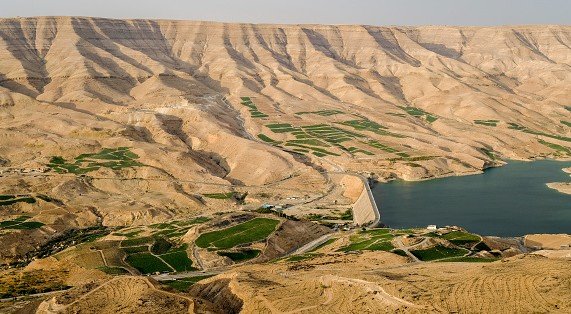
Six dams across Jordan have reached full storage capacity following a recent weather system that brought widespread rainfall to much of the Kingdom, the government said on Tuesday. Officials described the inflows as a positive boost to national water reserves as authorities moved to monitor safety and manage excess water.
The update was issued by the Ministry of Water and Irrigation in coordination with the Jordan Valley Authority, which said technical teams are monitoring dam levels around the clock.
Dams that have reached full capacity
The ministry said rainfall over the past hours increased inflows to most dams nationwide, pushing six facilities to their maximum storage levels.
The dams that are now full include:
| Dam | Governorate | Storage Capacity |
|---|---|---|
| Wadi Al Karak Dam | Karak | 2 million cubic metres |
| Lajoun Dam | Karak | 1 million cubic metres |
| Shaydhim Dam | Tafileh | 750,000 cubic metres |
| Mujib Dam | Karak | 25 million cubic metres |
| Wadi Shuayb Dam | Balqa | 1.5 million cubic metres |
| Ibn Hammad Dam | Karak | 4 million cubic metres |
Officials said controlled water management procedures are in place to ensure dam safety and downstream protection.
Rainfall performance this season
According to the ministry, the current rainy season has so far reached 41.7 percent of Jordan’s long term annual average rainfall, which is estimated at 8.196 billion cubic metres.
This level already represents 94.5 percent of the total rainfall recorded during the previous season, indicating a notably stronger start to the current winter period.
Other dams across the Kingdom have also received significant inflows, though they have not yet reached full capacity.
Continuous monitoring and safety measures
Authorities stressed that dam safety remains the top priority as reservoirs fill rapidly.
Key measures currently in place include:
-
Round the clock monitoring by specialised technical teams
-
Continuous tracking of water levels and inflow rates
-
Application of high water safety standards at all facilities
The ministry said these steps are essential to managing peak inflows and preventing risks to nearby communities.
Field inspections in Karak
Secretary General of the Jordan Valley Authority Hisham Al Hayasa conducted field inspections at Ibn Hammad Dam and Karak Dam on Tuesday.
During the visit, he reviewed operational readiness and water management procedures, according to officials familiar with the inspections. The authority said such visits are routine during periods of heavy rainfall.
What this means for Jordan’s water outlook
Jordan is one of the world’s most water stressed countries, making rainfall driven gains in dam storage especially significant. While officials cautioned that more rain is needed to secure long term supply, the latest inflows provide short term relief and improve flexibility for irrigation and domestic use.
The ministry said it will continue issuing updates as weather systems move through the region and urged the public to follow official guidance near dams and flood prone areas.
Have you seen the impact of the recent rains in your area? Share your observations and help others stay informed.