
Robotic surgery has moved beyond pilot programs at King Faisal Specialist Hospital and Research Centre, becoming a core part of how some of the most complex procedures are delivered. Rather than limiting robotics to selective cases, the Riyadh based hospital has embedded the technology into high risk surgical pathways where precision, stability, and reduced physical strain are essential.
This approach reflects a broader shift in advanced healthcare, where robotics are no longer viewed as experimental tools but as critical infrastructure supporting patient safety and long term outcomes.
Robotics used where risk and complexity are highest
At King Faisal Specialist Hospital and Research Centre, robotic systems are deployed in procedures where traditional surgery can increase risk due to limited access, prolonged operating times, or delicate anatomy.
The hospital has applied robotic techniques in organ transplantation and advanced cardiac surgeries, areas that demand extreme accuracy and controlled movement. Surgeons use robotic platforms to achieve fine dissection and stable visualization, reducing tissue trauma and supporting faster recovery.
Rather than reserving robotics for convenience, the hospital prioritizes cases where the technology offers measurable clinical advantage.
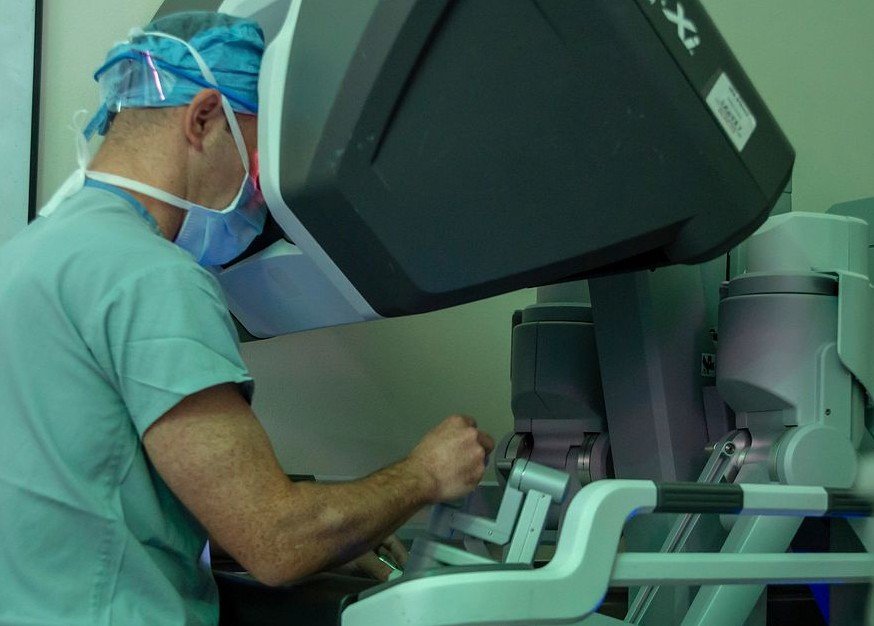
Expanding use across specialised procedures
Beyond transplant and cardiac care, robotics at KFSHRC have been integrated into a range of specialised interventions that require work within confined anatomical spaces.
These include:
-
Abdominal lymph node dissections requiring precise navigation around vital structures
-
Robot assisted implantation of intracranial electrodes for epilepsy evaluation
-
Procedures where stable instrumentation and fine motor control are critical
In these cases, robotic platforms provide consistent accuracy that can be difficult to maintain with conventional methods, particularly during lengthy operations.
Standardised pathways guide robotic surgery
One of the defining features of KFSHRC’s approach is that robotics are embedded within standard surgical workflows rather than treated as an exception. Each robotic case follows structured protocols designed to maintain safety and consistency.
This process includes multidisciplinary case review, detailed preoperative planning, and defined postoperative monitoring. Outcomes are tracked closely, allowing surgical teams to refine techniques and expand indications responsibly over time.
The hospital’s leadership has emphasized that technology alone does not improve care without disciplined integration into clinical practice.
Comparing conventional and robotic approaches
| Aspect | Conventional Surgery | Robotic Surgery at KFSHRC |
|---|---|---|
| Precision | Dependent on manual control | High consistency with robotic stability |
| Access | Larger incisions often required | Controlled access with minimal invasiveness |
| Fatigue | Higher physical strain on surgeons | Reduced fatigue during long procedures |
| Recovery | Longer hospital stays common | Potential for faster recovery |
This comparison highlights why robotics are being applied selectively to cases where benefits clearly outweigh costs and complexity.
Training and clinical governance remain central
KFSHRC has placed strong emphasis on surgeon training and clinical governance as robotics become more embedded. Surgeons undergo structured preparation to ensure they can safely operate robotic systems in complex scenarios.
Robotic procedures are also continuously reviewed through outcome analysis, ensuring patient safety remains the primary driver rather than technological enthusiasm.
This disciplined approach has helped the hospital avoid uneven adoption and maintain consistent standards across departments.
A model for advanced surgical care
KFSHRC’s experience shows how robotic surgery can mature into an essential clinical tool when applied thoughtfully. By focusing on complex, high risk procedures and integrating robotics into established care pathways, the hospital has demonstrated how technology can support better outcomes without disrupting clinical discipline.
As healthcare systems worldwide explore advanced surgical technologies, KFSHRC’s model offers insight into how robotics can move from innovation to standard of care when guided by evidence, training, and patient centered planning.
What do you think about robotics becoming routine in complex surgery rather than a niche option? Share your thoughts and join the discussion.
