Newly released State papers show that Irish officials in the mid-1990s were deeply uneasy about a proposed $1 billion Saudi-backed investment in Cork’s oil infrastructure, privately branding the plan “sketchy” and questioning the competence of those behind it, despite the promise of one of the largest foreign investments ever considered by the State.
The documents, opened under the 30-year rule, shed fresh light on how the Government weighed ambition against risk at a sensitive moment for Ireland’s energy policy.
A billion-dollar pitch that raised red flags early
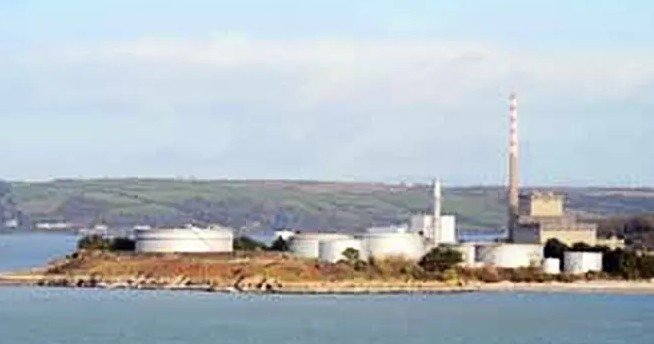
The proposal landed on desks in Dublin with eye-catching numbers. A group of Saudi investors offered to inject $1 billion into Ireland’s oil sector, centred on the Whitegate refinery and the Whiddy Island oil terminal in Cork.
At the heart of the plan was an 80 percent takeover of the State-owned Irish National Petroleum Corporation, which operated the Whitegate facility. The group also floated plans to build a new refinery capable of processing up to 150,000 barrels per day, with output destined for markets across Europe.
On paper, it sounded transformational.
Inside Government departments, though, caution quickly took hold.
Officials described the proposals as vague and poorly supported. One internal assessment pointed to a lack of detailed financial models, unclear governance structures, and an absence of verifiable technical experience.
The existing Whitegate refinery was valued by the State at just $40 million at the time, a figure that made the scale of the Saudi offer feel even more jarring.
Preference for a smaller, “businesslike” alternative
Files from the National Archives of Ireland show that officials were simultaneously considering a far smaller proposal from a UAE-based sheikh, focused solely on investment at Whiddy Island.
That offer, valued at around $70 million, was described internally as more “businesslike,” despite its limited scope.
In the end, neither project went ahead.
But the contrast is telling. Faced with a choice between size and clarity, the Government leaned instinctively toward caution, even if it meant passing on headline-grabbing sums.
One memo noted that credibility mattered more than scale, especially when strategic energy assets were involved.
Questions over competence and credibility
The Saudi group was described in official correspondence as being made up of “a number of prominent and wealthy Saudi personalities,” including Sheikh Haleem Faris Al Rahbani, who claimed access to Middle Eastern crude supplies.
Their vision involved shipping crude oil to Whiddy Island, then transferring it via pipeline to Whitegate for refining.
Yet by December 1994, senior civil servants remained unconvinced.
One official in the Department of Transport, Energy and Communications wrote bluntly that nothing presented so far showed the group had the competence required to be entrusted with Ireland’s strategic oil reserves.
Claims of refining experience in Angola and Djibouti could not be independently verified. That, according to the same memo, was “very damaging.”
Another official went further, dismissing some of the group’s submissions as “gobbledygook.”
Trust, once lost, proved hard to rebuild.
A request for political backing that never came
In April 1994, the investors formally requested a letter of support from the Irish Government to help advance the project and reassure backers.
That request was refused.
Officials were unwilling to grant exclusive negotiations, partly because another investor was being considered at the same time, and partly because doubts about the Saudi proposal had not eased.
Eight months later, then Minister for Energy Brian Cowen wrote to the group, stating clearly that their proposal did not align with Government policy, which was built around maintaining a controlling State interest in INPC.
He added that while the investors would be welcome to establish a refinery elsewhere in Ireland, the Whitegate plan did not fit the State’s strategy.
That letter, however, never reached its intended audience.
Diplomatic tightrope in Riyadh
A Saudi banker advising the group chose not to pass Mr Cowen’s letter on, telling the Irish ambassador to Saudi Arabia, Brendan J Lyons, that Sheikh Rahbani would “blow his top” if he saw it.
The ambassador asked that the letter be held back while multiple Government departments continued to assess the proposal, mindful of the scale of the promised investment.
At a meeting in Riyadh in February 1995, tensions were evident.
Sheikh Rahbani expressed frustration that he could not get the technical information needed to price the upgrades required at Whitegate. Mr Lyons responded by pointing out that the investors themselves had failed to provide clarity on who exactly was involved in the consortium or how refined products would be distributed.
The ambassador also noted that advisers attached to the project had been unimpressive, with some information supplied to Irish officials later found to be incorrect.
The group, one memo said, appeared burdened by “a plethora of advisers, bankers and lawyers.”
Internal frustration over missed opportunity
Despite the scepticism in Dublin, Mr Lyons worked persistently to keep dialogue alive, even drafting possible responses for the Minister for Energy.
In private correspondence, he expressed clear frustration.
“I think it is very strange that we should have to persuade, never mind that we cannot persuade, a Government department to give full attention to a $1,000 million project,” he wrote.
When he later learned that Mr Cowen’s successor, Michael Lowry, planned a response described as “less than forthcoming,” Mr Lyons was blunt: “This is no way to attract foreign investment.”
Still, doubts persisted.
Officials struggled to understand why the Saudis wanted to build a refinery in Ireland at all. An intermediary banker later explained that Whitegate offered immediate access to refined products and a shorter lead time for blending lubricating oils.
Even so, secrecy around the investor group and a slow, cautious working style continued to erode confidence.
Strategic assets and an uneasy conclusion
Whiddy Island was regarded by the investors as non-negotiable. Without it, they indicated, the project might collapse.
Ultimately, the Government chose a different path.
In March 1995, it announced that INPC would invest IR£18 million to restore the Whiddy oil terminal, which had been badly damaged by a fire in 1979, rather than proceeding with external investors.
With three decades of distance, the files paint a picture of a State torn between ambition and control, wary of surrendering strategic assets to partners it did not fully trust.
It was a moment when Ireland, still finding its footing as a destination for global capital, chose caution over spectacle.