
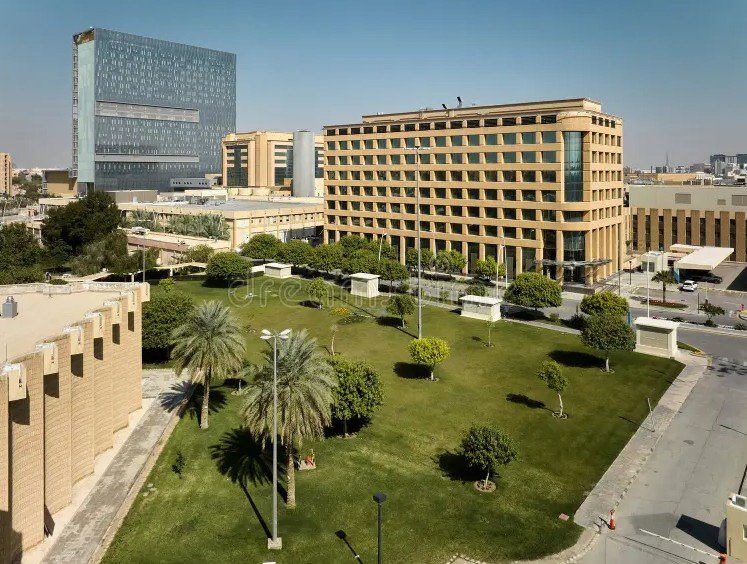
Artificial intelligence is no longer a side project at one of Saudi Arabia’s most prominent hospitals. In Riyadh, a major public medical institution has quietly folded AI into daily clinical and operational work, changing how doctors document care, how managers track bottlenecks, and how patients move through the system.
A shift from pilot projects to daily use
At King Faisal Specialist Hospital & Research Centre, artificial intelligence is treated less like a shiny experiment and more like plumbing. It’s there. It works. People rely on it.
Over the past few years, the hospital has built more than 30 AI tools internally, a number that surprises even seasoned health tech watchers. These systems touch everything from clinical notes to radiology workflows to multilingual communication. Most were designed in-house, shaped by doctors, nurses, analysts, and IT teams who deal with real-world pressure, you know, the kind that doesn’t show up in glossy demos.
In 2025, the hospital added a new layer: AI agents that automate routine tasks and support decision-making. The aim was simple, really. Reduce the paperwork load. Give clinicians more breathing room. Make operations smoother without rewriting the whole system.
One senior staff member described it bluntly: doctors were spending too much time typing and chasing forms, and not enough time thinking.
Inside the AI tools clinicians actually use
Some of the most visible changes happen quietly, behind the scenes. A physician dictates notes, and the system structures them into clinical documentation. A discharge summary is drafted automatically, then reviewed and signed off. Imaging scans are flagged for closer review, helping radiologists prioritize urgent cases.
There’s also medical translation, a big deal in a hospital serving patients from many backgrounds. AI-assisted translation helps clinicians communicate clearly, while still leaving final judgment in human hands.
A few examples of where these tools show up day to day include:
-
Automated generation of discharge summaries based on patient records
-
AI-supported analysis of radiology images to assist prioritization
-
Real-time tracking of patient flow to identify delays and chokepoints
-
Data analysis tools that help managers allocate staff and beds more effectively
None of these tools work in isolation. That’s kind of the point. They sit inside existing hospital systems, alongside electronic medical records and operational dashboards, rather than forcing staff to log into something new every five minutes.
And yes, some clinicians were skeptical at first. That’s normal. Trust builds slowly, especially in medicine.
Governance, guardrails, and a healthy dose of caution
For all the enthusiasm, the hospital has been careful. Very careful, actually. Every AI solution goes through a structured governance process before it becomes part of routine work.
There are defined use cases. Clear metrics. Regular reviews. The hospital tracks performance over time to watch for issues like bias or model drift, problems that can sneak up quietly if no one is paying attention.
This matters because healthcare data is messy. Populations change. Disease patterns shift. What worked last year might stumble this year if left unchecked.
Regulatory alignment is another big piece. Saudi Arabia has been building national frameworks for data protection, digital health, and AI ethics, and the hospital’s leadership has made a point of staying in step with those rules, as well as global standards.
One internal document described the approach as “value-first.” In plain language, that means AI has to solve a real problem. If it doesn’t, it doesn’t move forward. Simple as that.
There’s also an ongoing feedback loop. Clinicians report what helps, what annoys them, what slows them down. Some tools get refined. Others get shelved. No drama.
Building a digital innovation engine inside the hospital
What makes this effort stand out isn’t just the number of AI tools. It’s the structure behind them. The hospital operates a dedicated digital innovation function that scouts new technologies, tests ideas quickly, and translates promising concepts into usable systems.
This team sits at the intersection of medicine, engineering, and operations. They prototype. They test. They fail sometimes. Then they try again.
Crucially, they don’t work in a bubble. Clinicians are involved early, often complaining loudly when something doesn’t make sense. That friction, oddly enough, has been productive.
Over time, this has created a kind of internal muscle memory. Instead of asking, “Should we try AI?” teams ask, “Where would this actually help?” That’s a subtle shift, but a powerful one.
The hospital’s leadership has framed AI as a support layer, not a replacement for human judgment. Decisions still rest with clinicians. Accountability stays human. The tech just helps move information faster and more clearly.
It’s also worth noting that much of this work happened without huge public fanfare. No big launch events. No breathless slogans. Just steady integration.
What this says about healthcare in Saudi Arabia
Zoom out a bit, and this hospital’s experience reflects a broader trend in Saudi healthcare. The country has been investing heavily in digital health infrastructure, workforce training, and data systems as part of wider reforms.
Hospitals are under pressure to do more with finite resources. Patient volumes are growing. Expectations are higher. Administrative tasks keep piling up. AI, used carefully, offers one way to ease that strain.
Internationally, many hospitals are still stuck in pilot mode, running small trials that never scale. What’s happening in Riyadh suggests another path: build internally, integrate deeply, and treat technology as part of the institution, not an add-on.
Of course, challenges remain. Staff training is ongoing. Systems need constant tuning. Ethical questions don’t disappear. But the direction of travel feels clear.
As one clinician put it in an internal briefing, “If AI saves me ten minutes a day, that’s ten minutes back with my patients.” That sentiment, more than any strategy document, explains why these tools are sticking.
The hospital isn’t claiming to have solved everything. It’s just putting tools to work, step by step, in the messy reality of healthcare. And in 2025, that may be the most newsworthy part.
