
A senior delegation from Kuwait’s fire service has spent days inside Saudi Arabia’s rail network, studying how the kingdom handles fire prevention and emergency response as Gulf states quietly move closer to a shared railway future.
The visit comes at a moment when timelines, budgets, and public safety questions are tightening across the region.
Learning from Saudi Arabia’s rail build-out
The delegation was led by Brigadier Omar Hamad, Acting Deputy Chief for Civil Protection at the Kuwait Fire Force. During the visit to Riyadh, the team met with senior officials from Saudi Civil Defense, including Director General Major General Dr. Hamoud bin Suleiman Al-Faraj and Assistant Director General for Safety Major General Ajab Al-Harbi.
According to Kuwait News Agency, the purpose was direct and practical. Kuwait wants to learn how Saudi Arabia designs, operates, and enforces fire safety inside metro stations, rail corridors, and control centers.
There were no ceremonial speeches. The focus stayed on systems, drills, and what happens when things go wrong.
One official familiar with the meetings said the tone was “technical and honest,” with discussions centered on real-world scenarios rather than theory.
Inside stations, tunnels, and control rooms
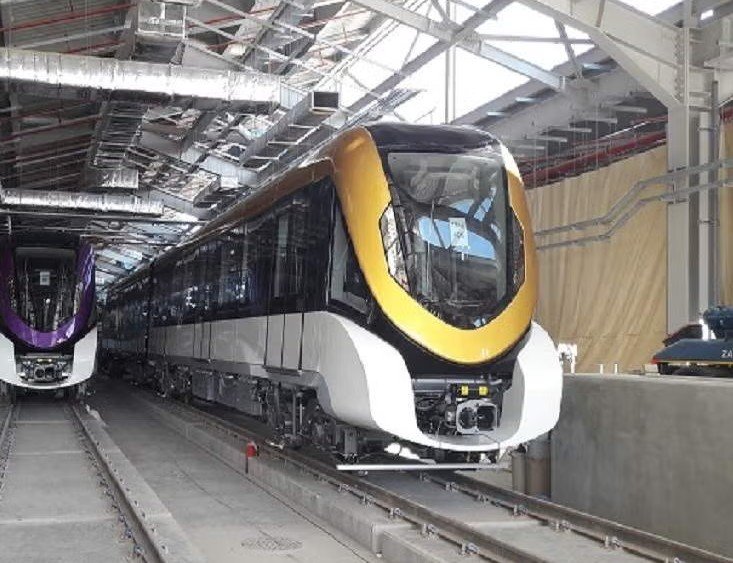
The Kuwaiti team toured several metro stations and facilities operated by the Saudi Railway Company, often referred to as SAR. Engineers and safety managers walked the visitors through detection systems, evacuation layouts, and command protocols used during emergencies.
What stood out was how deeply safety planning is built into daily operations.
Rather than treating fire response as a separate layer, Saudi rail projects integrate it into design choices, staff training, and maintenance routines. Stations are planned with smoke movement in mind. Control rooms are set up to coordinate across agencies within minutes.
During the tour, Kuwaiti officers reviewed:
-
Fire detection and alarm coordination inside stations and tunnels
-
Emergency access routes for responders
-
Passenger evacuation planning during peak hours
-
Training schedules for rail and emergency staff
The emphasis stayed on prevention first, response second.
A Kuwaiti officer on the trip said seeing these systems in action made the challenges feel more “manageable,” especially for underground and enclosed spaces.
Why Kuwait is paying close attention now
Kuwait is moving ahead with a national railway project that forms part of the wider Gulf Cooperation Council rail network. The target completion date for Kuwait’s section is 2030, in line with commitments made by GCC transport ministers.
At the center of Kuwait’s rail vision is a main hub planned in Shadadiya, designed to connect domestic lines with future cross-border routes.
Fire safety planning cannot wait until tracks are laid.
Rail experts say decisions made during early design stages shape emergency outcomes years later. Tunnel width, platform length, ventilation paths, and access points all affect how fast responders can move and how safely passengers can exit.
That reality helps explain why the Kuwait Fire Force is investing time now, well before trains begin running.
One regional transport adviser described it as “the quiet work that prevents loud disasters.”
Part of a wider exchange of expertise
The visit was carried out under the guidance of Kuwait Fire Force Chief Major General Talal Al-Roumi, as part of a broader push to strengthen technical readiness and cross-border cooperation.
Saudi Arabia has spent years building large-scale metro and rail systems, from urban transit to long-distance freight lines. That experience carries lessons that go beyond engineering.
Emergency coordination, for example, often involves police, civil defense, medical services, and rail operators working off the same playbook. Getting that alignment right is difficult, and mistakes tend to surface only during crises.
Kuwaiti officials said observing Saudi drills and command structures offered a clearer picture of how such coordination can work in practice.
In one session, the discussion turned to human behavior.
Crowd movement, panic, and communication breakdowns were all addressed, not just equipment and sensors.
How this fits into the Gulf rail picture
The GCC railway project has been discussed for years, sometimes loudly, often quietly. Each country is responsible for its own section, but the network only works if standards align across borders.
Safety is one of those standards.
A fire incident in one country’s system could affect confidence across the entire network. That’s why regional observers say these study visits matter as much as track construction.
To put the timelines into perspective:
| Country | Rail Section Status | Target Timeline |
|---|---|---|
| Saudi Arabia | Metro and national rail active | Ongoing expansion |
| Kuwait | Planning and early development | By 2030 |
| UAE | National rail advancing | Phased rollout |
| Oman | Gradual development | Long-term |
| Bahrain | Linked to GCC progress | Pending connections |
Each section moves at a different pace, but expectations around safety are rising together.
Saudi Arabia’s role as a reference point
Saudi Arabia’s rail build-out has made it a natural reference point for neighbors. Its projects combine scale, density, and complexity, especially in large cities where stations handle heavy passenger flows.
For visiting delegations, that scale offers something textbooks cannot.
Seeing how emergency teams rehearse scenarios, how systems are monitored day and night, and how lessons from drills are fed back into planning leaves a stronger impression than reports alone.
A senior Kuwaiti fire official said the visit helped narrow the gap between planning documents and operational reality.
“You can read standards anywhere,” he said. “Seeing how they are lived is different.”
What comes next
The Kuwait Fire Force is expected to incorporate lessons from the visit into its own planning frameworks and training programs. Further technical exchanges with Saudi counterparts are also being discussed, according to officials familiar with the talks.
As Kuwait’s railway project advances, fire services will increasingly be drawn into design reviews, not just emergency planning.
That shift is already happening across the Gulf.
Railways are no longer just transport projects. They are public spaces, economic arteries, and, in emergencies, high-risk environments that demand preparation long before the first ticket is sold.
For now, the visit ended quietly, without headlines or ceremonies.
But the systems reviewed, notes taken, and contacts made could shape how safely passengers move across borders years from now.
