
Jordan’s recent airstrikes in Syria’s southern province of Suwayda were not about ideology, banners, or declarations of war. They were about borders, control, and a quiet recalibration of how Amman protects itself in a region where lines on maps have long lost their meaning.
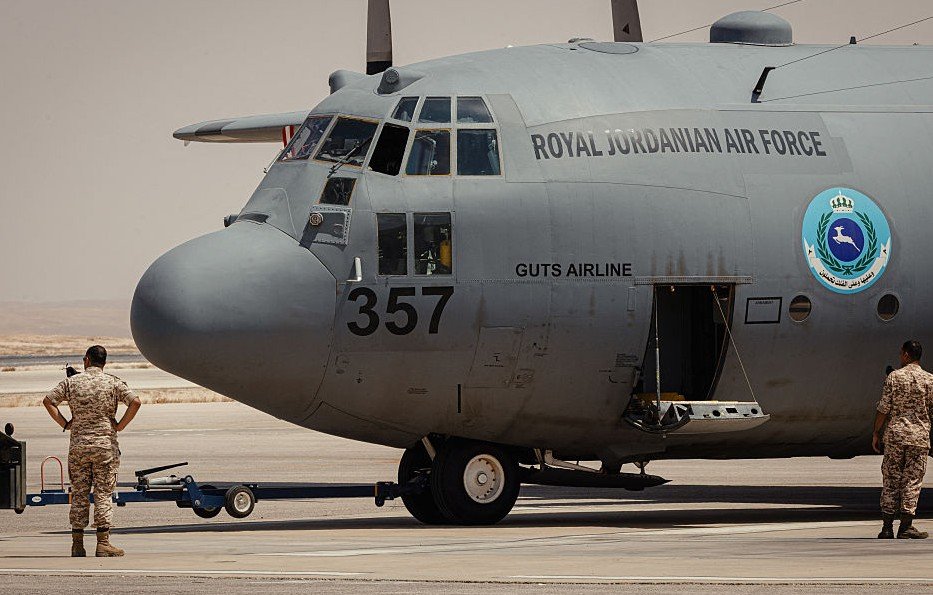
Carried out by the Royal Jordanian Air Force, the strikes marked a clear shift in intent, tone, and target selection. This was not counterterrorism as the world has come to know it. It was something more grounded, more tactical, and arguably more unsettling.
Not ISIS, not the coalition, not business as usual
The first thing Jordanian officials were careful to signal was what the strikes were not. They were not part of an international coalition campaign. They were not framed as operations against ISIS cells. And they were not accompanied by the familiar rhetoric of ideological extremism.
That silence mattered.
Suwayda has never fit neatly into the categories used to describe Syria’s war. It is not a stronghold of ISIS like parts of the Badia. It is not firmly held by the Syrian state. And it is not governed by a single armed authority.
Instead, it sits in between. A place where control is fragmented, deals are local, and power shifts quietly.
Jordan knows this terrain well.
Why Suwayda has become a pressure point
Located directly north of the Jordanian border, Suwayda has over the past few years turned into a corridor rather than a front line. Smuggling routes snake through its countryside. Armed groups operate without clear chains of command. And the absence of firm state oversight has allowed illicit economies to take root.
What passes through those routes is no longer limited to small-scale contraband.
Jordanian officials have repeatedly warned about weapons trafficking and large-scale drug smuggling, particularly synthetic narcotics, flowing south. These networks are not ideological movements. They are businesses. Flexible, opportunistic, and often better funded than local authorities.
From Amman’s perspective, that changes the threat equation.
Targets described as “shadow infrastructure”
Information emerging after the strikes suggests that the targets were not conventional military installations. No parade grounds. No barracks. No training camps.
Instead, the strikes reportedly hit:
-
Weapon storage sites
-
Drug caches
-
Warehouses used as logistical hubs
-
Abandoned or repurposed structures used for concealment
These locations form what security analysts often call shadow infrastructure. Facilities designed to blend into civilian or semi-abandoned landscapes. Hard to detect. Easy to move. Ideal for smuggling operations.
Destroying them sends a message without triggering a broader confrontation.
Jordan appears to have calculated that message carefully.
A border-first doctrine takes shape
The operations point to a shift in how Jordan defines its security priorities.
Rather than waiting for threats to cross its border, Amman is signaling a willingness to act beyond it when necessary. Not to shape Syria’s internal politics, but to disrupt activities that directly affect Jordanian stability.
This is less about deterrence through spectacle and more about denial. Denying smugglers safe storage. Denying networks predictability. Denying the idea that the border is porous by default.
Jordan has quietly invested in surveillance, early-warning systems, and rapid-response capabilities along its northern frontier. The Suwayda strikes suggest those investments are now feeding into operational decisions.
Why the language stayed deliberately vague
One of the most striking aspects of the episode was the language surrounding it.
There were no dramatic statements. No named enemies. No televised briefings. That restraint appears intentional.
By avoiding explicit attribution to specific groups, Jordan limits escalation. Smuggling networks often overlap with local militias, tribal actors, and criminal entrepreneurs. Naming one risks inflaming several.
Silence, in this case, preserves flexibility.
It also leaves room for deniability on the other side of the border, where multiple actors operate in uneasy coexistence.
Syria’s fragmented south complicates everything
Southern Syria today is governed by a patchwork of arrangements. Local armed groups, informal authorities, remnants of state institutions, and criminal networks coexist uneasily.
Suwayda, with its distinct social fabric and history of relative autonomy, has largely stayed out of major battles. But that distance from front lines has made it attractive for activities that require discretion rather than dominance.
Jordan’s strikes acknowledge a reality many regional states quietly accept: large parts of Syria are governed through accommodation, not command.
And accommodation leaves gaps.
A regional signal, not just a local one
While the immediate targets were in Syria, the signal travels wider.
Jordan is telling neighbors, allies, and rivals that it will not absorb the costs of regional disorder quietly. If instability manifests as cross-border crime, the response may no longer stop at fences and patrols.
This approach mirrors trends elsewhere in the region, where states are increasingly willing to project force in limited, targeted ways to protect narrow interests rather than pursue sweeping security agendas.
It is less ambitious. Also less predictable.
Risks that come with precision
Targeted strikes reduce some risks, but they create others.
Smuggling networks adapt fast. Routes shift. Storage moves. Local alliances change. There is also the danger of miscalculation, especially in areas where civilians live close to illicit sites.
Jordan’s challenge will be sustainability. Strikes can disrupt, but they do not replace governance. And governance, in southern Syria, remains deeply fractured.
Still, from Amman’s view, inaction carried its own risks.
What this says about Jordan’s posture going forward
The Suwayda operation suggests Jordan is moving toward a more assertive, but tightly scoped, security posture.
Not intervention. Not occupation. Not alliance-building inside Syria.
Just selective force, used quietly, when border threats cross a certain threshold.
Whether this becomes a pattern or remains an exception will depend on what happens next along the frontier. Smuggling volumes. Local responses. And whether regional dynamics allow Jordan to keep acting without being pulled deeper in.
