A fresh diplomatic clash at the United Nations has laid bare how fragile the Egypt–Turkey rapprochement remains. At the center of the dispute are maritime lines off Libya’s coast, a technical-sounding issue that, in reality, touches raw nerves about sovereignty, influence, and control in the eastern Mediterranean.
Public smiles may exist. The strategic mistrust does not.
A thaw that never quite reached Libya
Relations between Cairo and Ankara have improved on the surface in recent years. High-level visits resumed. Rhetoric softened. In September 2024, Abdel Fattah el-Sisi traveled to Ankara, where he met Recep Tayyip Erdoğan, marking a symbolic step after years of cold ties.
Yet Libya has remained the one issue both sides carefully avoid resolving.
That avoidance broke down this autumn when Egypt submitted a sharply worded filing to the United Nations, pushing back against Libya’s newly declared maritime boundaries. The document, circulated on September 16, 2025, amounts to Cairo’s strongest rejection yet of claims rooted in Libya’s alignment with Turkey.
Behind diplomatic language sits a blunt message: Egypt sees these moves as a direct threat to its maritime rights.
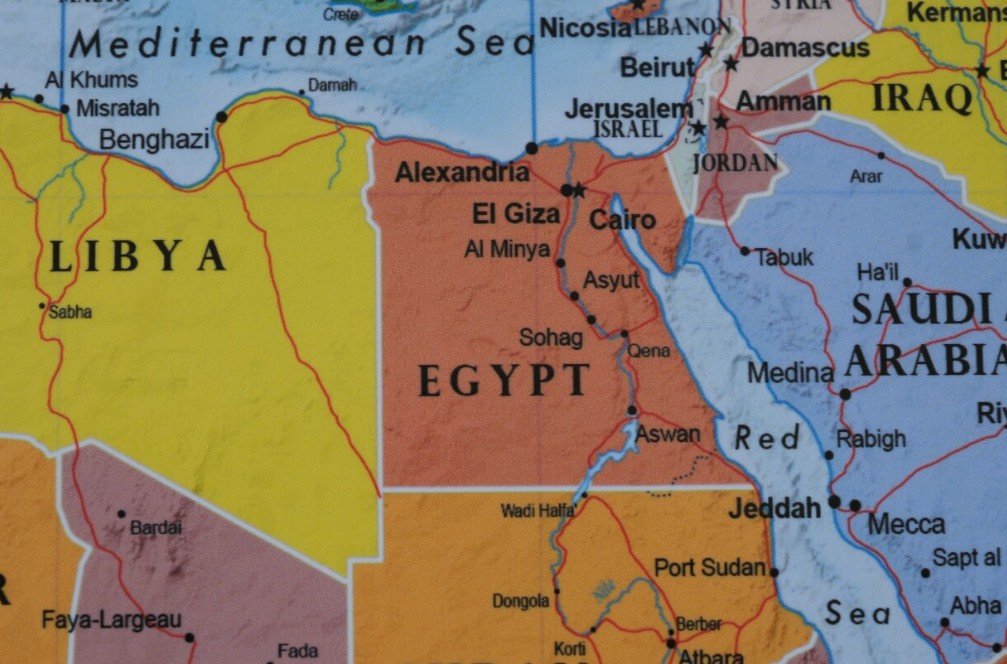
What Egypt is objecting to at the UN
Libya filed documents with the UN in May and June 2025 outlining the outer limits of its continental shelf in the Mediterranean. The submission included detailed maps and coordinates, asserting jurisdiction far beyond Libya’s coastline.
Egypt’s response argues those claims go too far.
According to Cairo, Libya’s declared maritime zones intrude into areas Egypt considers its own, including parts of its territorial sea, contiguous zone, exclusive economic zone, and continental shelf. Egypt’s filing states that Libya’s proposed eastern boundary lies entirely within Egyptian waters.
In diplomatic terms, this is a serious charge.
Egypt is effectively accusing Libya of attempting to redraw maritime geography unilaterally, without consultation, and at Egypt’s expense. Officials argue that such filings, once registered internationally, risk shaping future legal interpretations even if contested.
That’s why Cairo moved quickly, and publicly.
The Turkey–Libya agreement at the heart of the row
Libya’s UN submission does not exist in isolation. It is explicitly based on the 2019 maritime delimitation memorandum signed between Tripoli and Ankara.
That deal, controversial from the start, ignored the claims of other eastern Mediterranean states and drew a diagonal maritime corridor between Turkey and Libya. Greece and Egypt both rejected it outright at the time.
Libya’s 2025 filing goes further. It asserts that the Turkey–Libya arrangement represents an equitable solution under international law and states plainly that neither Egypt nor Greece holds sovereign rights in the zones delimited between Libya and Turkey.
For Cairo, that language crosses a red line.
By grounding its claims in a deal brokered with Ankara, Libya is seen by Egypt as extending Turkish influence westward across the Mediterranean, using legal filings rather than naval deployments.
Why maritime lines matter so much
Maritime boundaries may look abstract on a map, but they carry concrete stakes.
Control over these zones affects access to offshore energy resources, shipping routes, and future infrastructure projects. In the eastern Mediterranean, where gas discoveries have reshaped regional calculations, lines on paper can translate into leverage on the water.
Egypt has invested heavily in positioning itself as a regional energy hub, linking gas fields, liquefaction plants, and export routes. Any challenge to its maritime jurisdiction raises concerns about long-term strategy, not just immediate territory.
Turkey, meanwhile, has pursued an assertive maritime doctrine that seeks to break what it sees as attempts to confine it to narrow coastal waters. Libya, divided politically and militarily, has become a key partner in that effort.
The UN filing brought all those tensions back into view.
A legal fight layered over a political one
At the United Nations, Egypt’s move was procedural but pointed. By formally objecting, Cairo aims to prevent Libya’s claims from gaining quiet acceptance through lack of response.
International maritime law does not automatically settle disputes simply because coordinates are filed. Objections matter. Silence can be costly.
Egypt’s filing stresses that Libya’s claims violate established principles, including respect for existing boundaries and the need for agreement among neighboring states. It frames Libya’s move as unilateral and destabilizing.
Libya, for its part, insists it acted within its rights and in line with the 2019 memorandum with Turkey.
Turkey has not filed the documents itself, but its legal and diplomatic fingerprints are all over the case.
Normalization meets its limits
The dispute highlights the narrow scope of the recent Egypt–Turkey normalization.
While trade, diplomatic representation, and regional dialogue have improved, core strategic disagreements remain untouched. Libya tops that list.
Egypt backs forces in eastern Libya and favors a centralized state structure that limits Turkish reach. Turkey supports authorities in western Libya and maintains a military presence there.
Those positions haven’t changed.
The UN clash shows that normalization has focused more on managing tension than resolving it. Both sides have avoided escalation, but neither has conceded ground.
One regional analyst described the situation as “polite rivalry with sharp edges.”
Regional reactions and quiet concern
Other Mediterranean players are watching closely.
Greece, which has its own disputes with Turkey over maritime zones, has expressed consistent opposition to the Turkey–Libya deal. Any UN recognition of Libya’s claims could complicate Athens’ position as well.
European officials worry that overlapping filings and objections could harden positions, making negotiated solutions harder down the line.
For now, the dispute remains diplomatic, not military. No ships have been dispatched. No drills announced.
But the legal paper trail is growing, and once established, it can shape future arbitration and negotiations.
A reminder of unresolved fault lines
The episode serves as a reminder that gestures of reconciliation do not erase structural conflicts.
Egypt and Turkey may share interests on some regional files, but Libya remains a fault line that cuts deep. Maritime claims bring that tension into sharp focus because they turn political rivalry into measurable coordinates.
At the UN, Egypt made clear it would not let those coordinates stand uncontested.
The broader question is whether this clash stays confined to legal notes and diplomatic exchanges, or whether it signals a harder phase in eastern Mediterranean competition.
For now, the message from Cairo is unmistakable: normalization has limits, and Libya is where those limits show.