Workers have begun laying tracks east of Cairo for Egypt’s first high-speed railway, a flagship project meant to connect the Red Sea and the Mediterranean and reshape how people and goods move across the country. Officials say trains could start running as early as 2026.
The ambition is vast. So are the stakes.
A rail line billed as a national shortcut
The new corridor, known as the Green Line, stretches roughly 660 kilometers from Ain Sokhna on the Red Sea to Marsa Matrouh on the Mediterranean coast.
Transport Minister Kamel al-Wazir has likened the line to a “new Suez Canal on rails,” a phrase that signals how central the project is to Egypt’s plans. Once complete, the journey is expected to take as little as three hours for both passengers and freight.
Construction crews are now visible in the desert east of Cairo, laying the earliest sections of track. Heavy equipment cuts through sand that, until recently, saw little movement at all.
This is Egypt betting big on steel and speed.
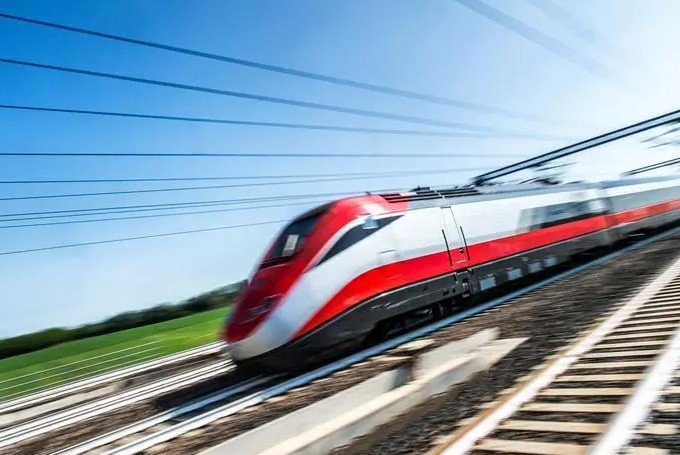
The deal behind the tracks
The project traces back to a 2021 agreement worth about $4.5 billion, signed with a consortium led by Siemens Mobility. The Green Line will be the first segment of a wider plan: three high-speed railways spanning nearly 2,000 kilometers across the country.
Authorities say the full network could eventually carry up to 1.5 million passengers a day. That figure, if reached, would mark a dramatic shift for a nation long reliant on roads and an aging rail system.
Egypt’s current trains serve roughly a million daily riders, but the network has struggled with years of underinvestment. Official data shows close to 200 rail accidents last year alone, many tied to worn infrastructure and maintenance gaps.
For planners, the new line is as much about safety as speed.
Crossing new cities, old bottlenecks
The Green Line cuts across Egypt’s northern belt, threading through major growth zones. It will pass the New Administrative Capital east of Cairo and 6th of October City to the west, home to the country’s only dry port.
Those stops are not incidental.
The railway is designed to plug new urban centers into national and global trade routes, linking ports, industrial zones, and logistics hubs in one sweep. Freight trains are expected to move containers inland faster, easing pressure on roads and lowering transport times between coasts.
Planners argue that the line’s value lies in what it connects, not just how fast it runs.
A senior official involved in the project said the goal is to “re-balance movement across Egypt,” shifting activity away from a single crowded corridor around Cairo.
A familiar playbook of megaprojects
The high-speed rail fits neatly into the development strategy pursued under President Abdel Fattah el-Sisi over the past decade. Massive undertakings — new cities, expanded highways, port upgrades — have become hallmarks of the government’s approach.
The most prominent example remains the $58 billion New Administrative Capital, still lightly populated but steadily expanding. Supporters say these projects lay groundwork for long-term growth. Critics question cost, debt, and timing, especially as inflation and currency pressures weigh on households.
The railway, though, has drawn broader acceptance, partly because of the visible strain on existing transport.
As one Cairo commuter put it recently, “Anything that makes trains safer is already an improvement.”
Hopes pinned on daily ridership
Officials estimate the Green Line alone could carry hundreds of thousands of passengers each day once fully operational. Over time, as the wider network takes shape, daily ridership could approach the 1.5 million mark.
That projection assumes fares remain affordable and schedules reliable, two factors that have tripped up past transport upgrades.
Here’s what authorities expect from the network:
-
Faster passenger trips between major cities
-
Dedicated freight paths reducing highway congestion
-
Fewer accidents compared with conventional rail
-
Lower travel times linking ports and inland hubs
Meeting those goals will require more than new trains. Staffing, maintenance, and coordination across agencies will matter just as much as concrete and rails.
Economic logic, political risk
From an economic angle, the railway promises efficiency. Shorter transit times can cut logistics costs and support exports. Construction itself brings jobs, though many are temporary.
The financing, however, adds pressure. Egypt has leaned heavily on borrowing to fund infrastructure, and repayment schedules loom large. Any delay or cost overrun would test already tight budgets.
Supporters counter that standing still carries its own cost. An unreliable rail system, they argue, limits growth and endangers lives.
That debate is unlikely to fade.
Desert tracks and long timelines
For now, the focus is practical. Crews lay track. Surveyors check alignments. Engineers adjust plans as sandstorms roll through work sites.
Completion is slated for 2026, an ambitious target given the scale. But early progress offers the government a visible sign of momentum.
In the desert east of Cairo, where rails now glint under winter sun, Egypt’s transport future is taking physical shape. Whether it delivers on its promise will become clear only once the first trains run coast to coast.