Cairo’s cultural scene welcomed a high-profile guest this week as a senior UAE official attended a major musical production celebrating one of the Arab world’s most iconic voices. The visit underscored deepening artistic ties between Egypt and the United Arab Emirates.
A cultural evening with regional significance
His Excellency Sheikh Abdulla bin Mohammed bin Butti Al Hamed, Chairman of the UAE National Media Office, was in Cairo on Friday as part of a broader effort to strengthen cultural and artistic cooperation between the two countries.
One of the central moments of the visit was his attendance at the musical theatre production “Umm Kulthum… Lost in the Voice of El-Sett.”
The show, staged in the Egyptian capital, draws inspiration from the life and legacy of Umm Kulthum, whose music continues to shape Arab cultural identity decades after her death.
The evening blended diplomacy with art, a pairing Cairo knows well.
A full house and a familiar name
The performance played to a packed audience, with theatre seats filled by figures from across Egypt’s cultural and public spheres.
Among those present were writer and intellectual Ahmed Al-Muslimani, popular singer and actor Tamer Hosny, along with journalists, media executives, and business leaders.
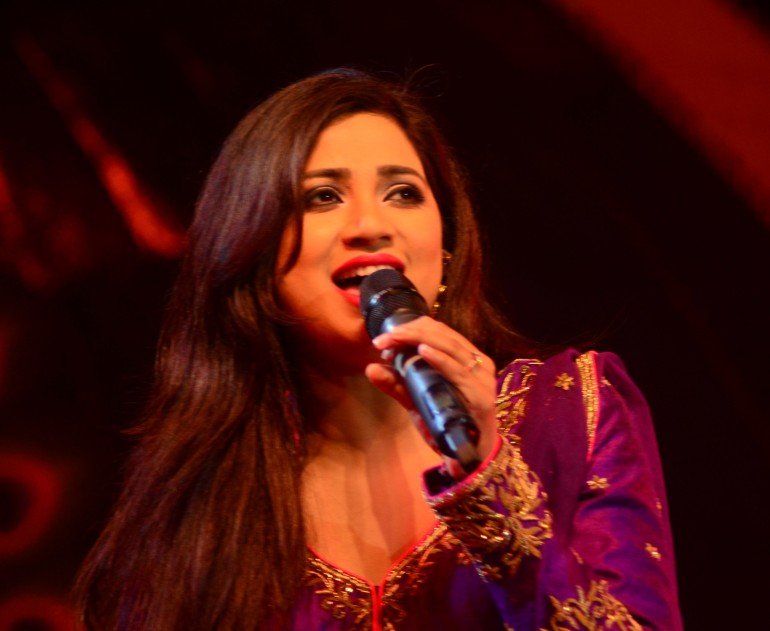
Their presence added weight to the evening, signaling that the production has crossed beyond niche theatre circles into the broader cultural conversation.
Musical theatre, often seen as a challenging format in the region, felt very much at home that night.
The audience reaction said as much.
Praise from the stage
After the final curtain, Sheikh Abdulla Al Hamed took the stage to address the cast and audience.
He spoke warmly about the production, describing it as an exceptional artistic experience that meets the highest global standards of musical theatre.
In his remarks, he compared the work favorably to productions seen on Broadway and London’s West End, a comparison that drew visible appreciation from the creative team.
He stressed that the musical should be viewed as a point of pride not only for Egypt, but for the wider Arab world.
That sentence landed with intent.
For Al Hamed, the show was proof that Arab stories, when told with care and creativity, stand comfortably on the world stage.
Reframing a legendary life
“Umm Kulthum… Lost in the Voice of El-Sett” is not a conventional biographical retelling.
Instead, it approaches the singer’s life through a contemporary theatrical lens, blending drama, choreography, and live music to trace her journey.
The narrative moves from her early years in the Dakahlia governorate to her rise as an international cultural figure whose voice echoed far beyond Egypt’s borders.
Scenes shift between personal struggle and public triumph, reflecting the complexity behind the legend.
Live performances of her music are woven into the storyline, not as imitation, but as reinterpretation.
That balance has been key to the show’s reception.
Critical and media response since October
The musical premiered in October 2025 and has since drawn sustained attention from critics and media outlets.
Reviews have praised its production values, staging, and willingness to treat Umm Kulthum’s story with both reverence and creative freedom.
Audiences, too, have responded strongly.
Tickets for multiple performances sold quickly, and word-of-mouth has played a notable role in sustaining interest.
One theatre-goer described the experience as “familiar, but new,” a phrase that captures the challenge of revisiting such a towering figure.
The production appears to have found that balance.
Cultural diplomacy through the arts
Sheikh Abdulla Al Hamed’s attendance was not framed as a ceremonial stop.
Instead, it reflected a broader strategy of cultural engagement between the UAE and Egypt.
Arts and media have become increasingly prominent tools in that relationship, offering shared platforms for storytelling and exchange.
By highlighting a production rooted deeply in Egyptian heritage, the visit signaled respect for local culture while reinforcing regional solidarity.
Such gestures matter in a region where culture often carries political and social weight.
They also resonate with younger audiences, many of whom encounter icons like Umm Kulthum first through reinterpretations rather than original recordings.
Musical theatre finds its moment
The success of the Umm Kulthum musical comes amid a wider revival of large-scale theatrical productions in Cairo.
Producers have grown more confident in blending traditional narratives with modern staging and technology.
Audiences, in turn, appear ready to embrace ambitious formats when the storytelling feels authentic.
This production has become a reference point in that shift.
Its ability to draw diverse audiences, from seasoned cultural figures to younger fans, suggests a changing appetite.
Theatre, once seen as niche, is reclaiming space.
A legacy carried forward
Umm Kulthum’s voice has long been described as timeless.
What this musical attempts, and largely succeeds in doing, is to show why that timelessness still matters.
By placing her story within a contemporary artistic frame, it invites new generations into the conversation without diluting the past.
Sheikh Abdulla Al Hamed’s remarks reinforced that idea.
Legacy, he suggested, survives not by being frozen, but by being reimagined with respect.
As the curtains closed in Cairo, that message lingered.