National Day spirit sets the tone in Doha
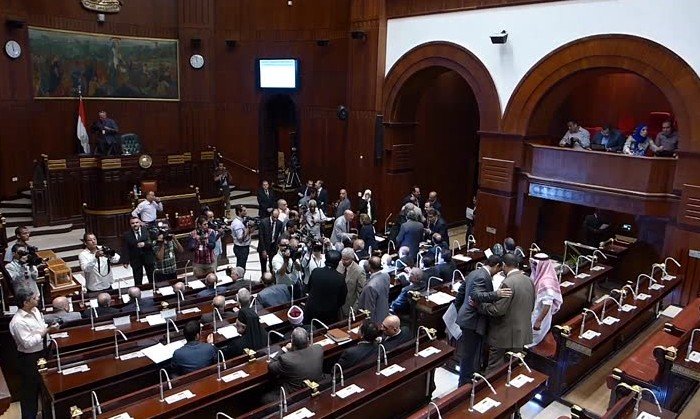
The Shura Council opened its weekly session on Monday with a strong patriotic note.
Meeting at Tamim bin Hamad Hall under the chairmanship of Speaker Hassan bin Abdullah Al Ghanim, members extended congratulations to the Amir, His Highness Sheikh Tamim bin Hamad Al-Thani, the Father Amir Sheikh Hamad bin Khalifa Al-Thani, the Deputy Amir Sheikh Abdullah bin Hamad Al-Thani, and the people and residents of Qatar ahead of National Day on December 18.
The atmosphere was celebratory, but also reflective.
Council members highlighted this year’s National Day slogan, “With You It Rises, and From You It Awaits,” describing it as a direct expression of Qatar’s belief that human capital sits at the core of development. Youth, in particular, were singled out as key drivers of continuity and progress.
One member described the slogan as “simple, but heavy with meaning.”
The Council wished the country continued stability and prosperity under the Amir’s leadership, framing National Day as both a moment of pride and a reminder of shared responsibility.
Riyadh meeting seen as milestone in Qatar–Saudi relations
Beyond domestic themes, the Council devoted significant attention to regional diplomacy.
Members warmly welcomed the outcomes of the eighth meeting of the Qatari-Saudi Coordination Council, co-chaired by the Amir and Saudi Crown Prince and Prime Minister Mohammed bin Salman, which took place in Riyadh last week.
According to the Council, the meeting signaled a deepening commitment by both sides to structured coordination across a wide range of sectors. Political dialogue, security cooperation, defense coordination, economic and investment ties, energy collaboration, technology, and development were all highlighted as areas of shared focus.
The tone was notably confident.
Council members stressed that the Riyadh talks were not symbolic alone, but practical, aimed at building working mechanisms that can endure shifts in regional and global conditions.
One initiative, in particular, drew sustained attention.
High-speed rail link emerges as strategic symbol
The proposed high-speed electric rail link between Qatar and Saudi Arabia was described by the Shura Council as a standout outcome of the Riyadh meeting.
Members framed the project as more than infrastructure.
They said the rail link could reshape movement between the two countries, easing travel for people, streamlining the flow of goods, and giving tourism and trade a meaningful lift. Over time, they argued, it could also serve as a backbone for deeper economic integration across the Gulf.
In practical terms, the Council pointed to several expected benefits:
-
Faster cross-border travel for citizens and residents
-
Improved logistics and trade efficiency
-
Stronger tourism links between the two countries
-
Long-term support for regional economic integration
The rail project, combined with the agreements signed during the coordination council meeting, was described as a concrete step in reinforcing the strategic partnership between Doha and Riyadh.
Council members said such projects align with the aspirations of both nations and contribute to regional stability, peace, and shared prosperity.
One lawmaker summed it up in a single sentence: “Connectivity builds trust.”
Council business moves forward after diplomatic focus
After addressing National Day and regional relations, the session returned to parliamentary business.
Secretary-General of the Shura Council Nayef bin Mohammed Al Mahmoud read out the agenda, and members approved the minutes of the previous session without objection.
The procedural moment was brief, but it set the stage for the session’s second major focus: national planning.
Later in the meeting, the Council hosted the Secretary-General of the National Planning Council, Dr. Abdulaziz bin Nasser bin Mubarak Al Khalifa, for an in-depth discussion on Qatar’s Third National Development Strategy covering the period from 2024 to 2030.
Speaker Al Ghanim welcomed the guest, praising the planning approach adopted by the state under the Amir’s leadership and stressing the importance of aligning legislative oversight with long-term national goals.
A closer look at Qatar’s Third National Development Strategy
Dr. Al Khalifa delivered a detailed briefing that went beyond talking points.
He explained that the Third National Development Strategy was built following a broad assessment of national challenges, alongside careful analysis of regional and global shifts affecting economies, societies, and governance models.
Rather than being theoretical, the strategy aims to respond to real pressures facing the country.
According to Al Khalifa, the plan rests on seven core national outcomes, which together form the backbone of policy direction for the rest of the decade.
These outcomes include:
| National Outcome | Focus Area |
|---|---|
| Sustainable economic growth | Diversification and resilience |
| Fiscal sustainability | Balanced public finances |
| Future-ready workforce | Skills, education, productivity |
| Cohesive society | Social stability and inclusion |
| Quality of life | Health, housing, services |
| Environmental sustainability | Responsible resource use |
| High-performing institutions | Efficient, accountable government |
Al Khalifa emphasized that these outcomes are interconnected. Progress in one area supports gains in others, while neglect in one can slow the whole system.
He also noted that the strategy is not static. Regular reviews and updates are built into the framework to ensure policies remain aligned with changing conditions.
Human capital at the heart of planning
A recurring theme during the discussion was people.
Council members and the NPC secretary-general repeatedly returned to the idea that Qatar’s long-term success depends on investing in citizens and residents alike. Education, skills development, and workforce readiness were framed as priorities that cut across economic and social policy.
One Council member remarked that planning documents only matter if they translate into daily improvements in people’s lives.
Dr. Al Khalifa agreed, noting that quality of life indicators are treated as seriously as economic metrics in the current strategy. Health services, urban planning, environmental quality, and public service delivery all feature prominently.
The exchange was technical at times, but grounded.
Questions from Council members touched on implementation timelines, coordination across ministries, and how progress will be measured over the coming years.
Linking diplomacy, development, and governance
By the end of the session, a clear narrative had emerged.
The Shura Council’s praise for the Amir’s Riyadh visit, its emphasis on National Day values, and its engagement with long-term planning were not separate conversations. Together, they painted a picture of a state seeking alignment across diplomacy, domestic policy, and institutional performance.
Regional coordination with Saudi Arabia was framed as complementary to national development, not a distraction from it. Infrastructure projects, economic ties, and political dialogue were presented as external supports to internal goals.
At the same time, the focus on planning underscored that ambition needs structure.
As one observer noted quietly after the session, “Vision needs calendars.”
A session heavy with signals
Monday’s Shura Council meeting carried more weight than routine parliamentary gatherings.
It celebrated national identity, endorsed regional cooperation, and dug into the mechanics of how Qatar plans to manage growth, stability, and change through 2030.
The tone was confident but measured.
There was pride, but also an acknowledgment that progress requires constant adjustment and coordination, both at home and with neighbors.