
U.S. asset manager Guggenheim Investments, which oversees roughly $357 billion, is now weighing the establishment of a physical presence in Saudi Arabia as part of its expanding push into the Gulf. The firm already operates in Dubai and is finalising licensing in Abu Dhabi, and the next step may be moving into the Saudi capital to deepen investments in fast-growing sectors.
The development highlights how international fund managers view the Gulf not as a peripheral market, but as a central destination for long-term capital, infrastructure partnerships, and strategic financing.
Guggenheim Confirms Active Consideration of Riyadh
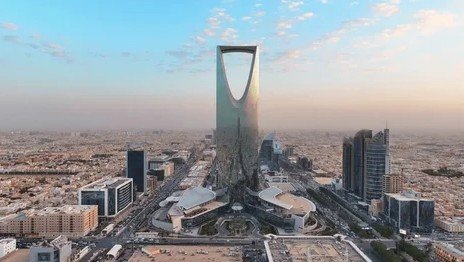
Anne Walsh, Chief Investment Officer at Guggenheim Partners Investment Management, said the company is actively evaluating an office in Riyadh. She added that Guggenheim intends not only to deploy teams locally but also to put meaningful capital into Saudi projects.
A small breather sentence: the conversations are already serious.
Walsh confirmed the strategic interest during the Milken Institute’s Middle East and Africa summit in Abu Dhabi, saying the firm views Saudi Arabia as a fertile environment for infrastructure, transportation, financing, and emerging technology sectors.
She explained that physical presence matters: “We are looking to deploy capital in Saudi Arabia as well. Not just with an office, but to actually make investments,” she said.
Transportation and Infrastructure Seen as Core Opportunity
Guggenheim’s global investment portfolio includes major allocations to transportation equipment, infrastructure assets, and long-term capital projects. Walsh said Saudi Arabia’s ongoing industrial and logistics upgrades fit naturally with those interests.
Saudi Arabia has been scaling rail projects, air logistics networks, manufacturing expansion, giga-city development, and national infrastructure zones. Many of these are designed for durability rather than short-term cycles.
One sentence keeps rhythm.
That makes the country attractive for asset managers like Guggenheim that prefer capital deployment into scalable physical systems with steady returns rather than purely speculative financial assets.
Gulf States Push Economic Diversification at Scale
The Gulf’s financial story is changing rapidly. Sovereign funds in the region — especially in Abu Dhabi, Qatar, and Saudi Arabia — have been rebalancing portfolios and prioritising non-oil economic sectors, including financial services, industrial manufacturing, tourism, telecom networks, and clean-energy technology.
A one-line pause: the diversification agenda is no longer theoretical.
Saudi Arabia, for example, has directed billions into aviation, mixed-use districts, automotive manufacturing, mining, and smart-city projects under its Vision 2030 platform.
Those sectors often need blended financing: equity, debt, infrastructure banking, and long-term asset management — all areas where external firms can play a role.
Guggenheim Deepens Gulf Footprint Before Riyadh Decision
The firm already operates in Dubai, widely recognised as the region’s central commercial and trade hub. It is currently completing licensing in Abu Dhabi, which hosts sovereign wealth funds managing around $2 trillion in combined assets.
These relationships are more than symbolic.
One short sentence fits naturally: it gives Guggenheim proximity to capital and regional co-investment channels.
Once licensed in Abu Dhabi, Guggenheim can partner alongside sovereign funds that seek long-term yield across global and local projects. Strategic collaboration with state asset pools can accelerate access to capital-intensive projects like ports, energy systems, transit, and logistics parks.
Moving into Riyadh would extend that reach geographically and politically.
Technology, AI, and Energy Convergence Drives Investor Interest
Walsh highlighted another motivation: Gulf governments are increasingly positioning themselves as AI, technology, and advanced-industry hubs, backed by data centers, green energy capacity, cybersecurity zones, and policy support for digital industries.
She noted that the region’s ability to generate stable energy — both fossil and alternative — underpins large-scale computing and AI rollouts, making the area uniquely attractive for technology-linked capital expenditure.
A one-sentence break: infrastructure and AI spending are becoming inseparable.
Investors across the Gulf want financing models that connect energy availability to new digital industries, and asset managers are taking notice.
Saudi-U.S. Investment Links Strengthen
Last month, officials from both Washington and Riyadh promoted billions of dollars in new bilateral investment commitments, making clear that the financial corridor between the two countries is widening rather than cooling.
Saudi Arabia has sought deeper U.S. corporate, financial, and industrial involvement to accelerate diversification. Meanwhile, global funds seek entry into long-horizon projects tied to infrastructure, energy, mobility, and domestic supply chains.
A short line: those incentives align almost perfectly with Guggenheim’s portfolio preferences.
Guggenheim Already Integrated Into Riyadh’s Strategic Circles
Guggenheim Investments became a strategic partner of the Future Investment Initiative (FII) Institute earlier this year, giving the firm a direct role in the annual Riyadh flagship conference where sovereign funds, multinational corporations, and global financiers negotiate major deals.
That partnership is not merely branding. It provides close interaction with ministry-level planning, giga-project rollout, industrial pivoting, and the real-time evolution of capital markets.
And a short standalone sentence: relationship capital often precedes financial capital.
If Guggenheim opens a Riyadh office, that local access becomes even tighter.
Why Saudi Arabia Fits a Long-Term Asset Manager
Saudi Arabia is a market where:
-
Infrastructure is growing
-
Transportation networks are expanding
-
Energy transitions are financed over decades
-
Sovereign entities prefer reliable capital partners
-
Industrial cities need blended funding structures
These dynamics suit Guggenheim’s long-term return profile more comfortably than short-cycle trading or speculative equity exposure.
A quick rhythm shift: the appeal is structural, not seasonal.
That is why Walsh emphasised both optimism and proximity — an office is not symbolism, but a doorway into large-scale capital deployment.
