
Amazon Egypt is expanding its logistics and storage infrastructure at one of the fastest rates since it entered the market, driven by a sharp rise in essential goods demand and a boom in locally manufactured products. The company now controls more than 100,000 cubic metres of storage capacity, spread across major fulfilment hubs and partner-operated facilities, signaling long-term confidence in the strength of Egypt’s digital economy.
The expansion highlights how inflation, exchange rate pressure, and shifting consumer behaviour have completely reshaped online buying patterns across the country.
Essentials Drive E-Commerce Behaviour
Households have dramatically reduced discretionary spending over the past two years. Instead, purchasing patterns on Amazon.eg show that shoppers now prioritise basics — food staples, cleaning supplies, baby care items, personal hygiene, and low-cost home necessities.
Omar Elsahy, General Manager of Amazon Egypt, said the shift is unmistakable. Higher inflation and unpredictable foreign currency prices have forced families to make different choices.
He said Amazon’s immediate response was to strengthen availability and reliability in these essential categories.
A short one-line paragraph: necessity has replaced novelty.
The transition is not only about stocking more inventory but also about securing predictable supply and making sure that customers don’t experience sudden price spikes related to sourcing delays.
Local Manufacturing Becomes a Growth Engine
One of the most unexpected developments in Egypt’s online retail space has been a rise in the availability and quality of locally made products. Apparel makers, home décor suppliers, small electronics workshops, furniture units, and accessory designers have expanded output, creating entirely new product lines for digital storefronts.
Elsahy said the local manufacturing revival has reshaped Amazon’s strategy. Many new sellers and artisans now use Amazon.eg as their primary sales channel because it gives them a national reach without investing in costly distribution networks.
Here’s a natural bullet-point summary based on current observations:
-
Higher-quality Egyptian-made products entering core categories
-
Wider customer selection at more accessible prices
-
Rapid onboarding of SMEs and independent creators into Amazon storefronts
He added that Amazon’s SME programmes help manufacturers with marketing tools, analytics, packaging support, and fulfilment services. For many family-owned factories and micro-producers, entering digital retail was historically challenging because delivery logistics were expensive.
A smaller sentence increases rhythm: e-commerce has become their bridge to national markets.
Elsahy said local sellers are no longer competing only on cost. They are earning loyalty based on individuality, craftsmanship, and faster delivery compared to imported items. Over the past three years, these SMEs have helped sustain e-commerce momentum even during economic downturns, giving Amazon reliable product diversity and price stability.
Fulfilment Capacity Scales Ahead of Market Needs
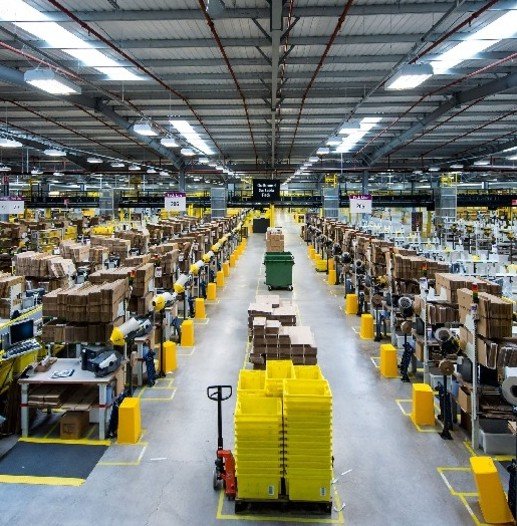
Amazon’s logistics footprint in Egypt has reached more than 100,000 cubic metres, including its main fulfilment sites in 10th of Ramadan and along the Suez Road. These hubs are backed by several partner-operated facilities that support inbound processing, regional配送, returns, and storage.
One of the newest sites offers storage space equivalent to ten football fields, a rare figure for Egypt’s online retail industry. The scale shows that Amazon’s ambitions go beyond meeting temporary demand spikes. The company is building capacity that anticipates future e-commerce expansion and a steady rise in domestic manufacturing volumes.
A brief transition sentence for balance: these facilities don’t just store products—they enable price consistency.
Large-scale storage allows Amazon sellers to reduce freight uncertainty, lock in raw material purchases, and avoid cost shocks caused by exchange rate volatility. As local production strengthens, bigger warehousing ensures faster fulfilment, improved stock continuity, and broader nationwide coverage.
Elsahy noted that the company prefers long-term strategic planning, not reactive expansion. The investments reflect Amazon’s expectation that Egypt’s digital economy will keep growing even if short-term inflation remains challenging.
SME Success Is Transforming How E-Commerce Works
Three years ago, Egypt’s online sales ecosystem was dominated by global brands and imported goods. But as purchasing power dropped, consumers rediscovered the appeal of domestic products.
Local sellers now bring design-forward products, seasonal customisation, lower after-sales risk, and shorter restocking cycles.
A single line sits well here: lower uncertainty is valuable during inflation.
Manufacturers that once sold only through wholesalers or physical channels are digitising quickly. Some have grown from small workshop units to nationwide supply partners using fulfilment tools that reduce operational complexity.
Many SMEs that joined Amazon.eg during economic turbulence found that their business survived because online channels offered consistent demand from households trying to save money without compromising quality.
Economic Pressure Is Reshaping Digital Logistics
Inflation and FX uncertainty have forced every part of the supply chain to adjust. Families search for durability in home products, value in clothing, and reliable pricing for consumables. Sellers respond by planning production more carefully to avoid stockouts or raw material shocks.
Amazon’s larger storage grid supports that planning. Sellers can manufacture bigger batches, secure materials in advance, and spread risk calmly rather than improvising every quarter.
A table helps capture current market behaviour patterns clearly:
| Category | Consumer Trend |
|---|---|
| Essential Goods | Higher frequency, predictable restocking |
| Local Products | Quality-driven buying, lower import exposure |
| Home Accessories | Seasonal demand with steady pricing |
| Apparel | Growth in local brands vs imports |
This trend has helped stabilize seller revenue and customer pricing during a period when other sectors faced volatility.
One short sentence: storage capacity is no longer just a warehousing metric—it’s a pricing tool.
By giving SMEs access to affordable storage, Amazon effectively reduces friction in the market. Cost pressures feel less punishing when logistics are predictable.
