
A diplomatic push from Washington is nudging Israel into unfamiliar political territory, with US President Donald Trump urging Tel Aviv to adjust its long-held posture on Syria and engage directly with transitional president Ahmed Al-Shar’a. The message, delivered through public praise, quiet calls and pointed timing, signals a shift that could reshape regional calculations faster than either side expected.
And honestly, it caught parts of Israel’s political establishment off guard.
A New US Line Forces Israel to Reassess Old Assumptions
Trump’s warm comments for Syria’s transitional government, posted on Sunday, were anything but casual.
They came right after his meeting with Al-Shar’a and days after a deadly Israeli strike in southern Syria.
The Jerusalem Post’s analysis suggests the White House is now pushing Israel to “rethink the fundamentals,” not just fine-tune its northern strategy. For years, Israeli doctrine assumed Syria was a fractured, unreliable actor, making airstrikes the preferred method of containing threats.
Now Washington wants Israel to lower tensions.
That’s the blunt core of the message.
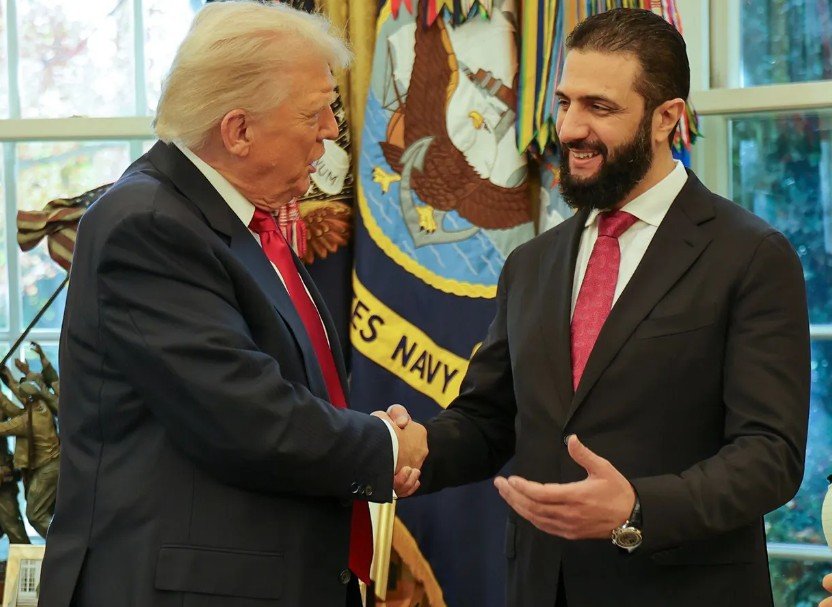
The remarks arrived alongside Trump’s call with Israeli Prime Minister Benjamin Netanyahu, where the pair discussed a possible meeting later this month. The timing wasn’t lost on analysts: the US wants Syria elevated in regional planning, not sidelined.
Inside Israel, however, mistrust remains deeply rooted. Several senior officials still describe Damascus as unstable and vulnerable to internal shifts. Others warn the country is influenced heavily by armed groups, making diplomatic overtures risky.
A single-sentence paragraph here for pacing.
None of this makes Washington’s pressure easier to absorb.
Israel’s Confidence From Regional Operations Shapes Its Resistance
Israel’s stance today is influenced heavily by what it sees as operational momentum.
Air campaigns against Hamas, Hezbollah and Iranian assets have expanded across multiple theatres.
In the past year, Lebanon has seen hundreds of strikes. Gaza continues to experience near-daily incidents. And inside Syria, operations have grown more frequent, sometimes more audacious.
Decision-makers believe this “constant pressure” approach keeps adversaries unbalanced. It’s a notable shift from the pre–7 October strategy, which leaned on long periods of relative calm.
But it also brings an obvious dilemma into view:
Is Israel eliminating threats inside Syria, or creating new ones?
Trump’s comments seemed aimed squarely at that question.
He called for “peace and stability” in Syria, saying the country must be allowed space to rebuild. He highlighted the damage caused by sweeping sanctions and hinted that easing them is essential for a meaningful economic recovery.
Then he added something sharper: Israel must avoid actions that disrupt Syria’s attempt to regain stability.
A small paragraph to adjust the rhythm.
It was clear enough that even seasoned diplomats described the remarks as unusually direct.
Washington’s Push for Dialogue Redraws the Political Map
According to analysts, Trump’s emphasis on a “strong and sincere dialogue” with Damascus signals a policy shift with ripple effects.
This isn’t a soft recommendation—it’s a strategic expectation.
He underscored that maintaining open communication between Israel and Syria is essential for regional security and long-term US goals. And by publicly praising Al-Shar’a’s “commitment” to governance, Trump placed additional weight on the transitional leader, effectively recognizing him as a central figure in the region’s next phase.
There’s a natural place here for a concise bullet point summarizing Washington’s new emphasis:
-
Engage Damascus diplomatically, reduce military escalations, and support Syria’s stabilisation efforts.
Many in Israel view this approach with caution.
Some argue that Syria’s internal shifts remain too unpredictable for formal engagement. Others fear dialogue would appear as acceptance of a political order still viewed skeptically across the Israeli security establishment.
Yet US officials maintain that ignoring Syria’s transitional leadership now would weaken Washington’s broader regional design.
Syria’s Transitional Government Gains New Momentum With US Backing
Al-Shar’a’s sudden rise to diplomatic relevance stems partly from the political vacuum that followed years of conflict.
His administration, still forming its identity, has positioned itself as reform-oriented and stability-focused.
Trump’s public support gives the transitional government a boost. For Syria, heavily damaged by sanctions and conflict, even symbolic recognition carries weight.
One-sentence interjection.
And it changes how neighbours perceive Damascus.
The White House sees opportunities: a Syria that stabilises internally reduces the risk of cross-border escalation, lowers the influence of armed factions and creates space for economic reconstruction. For Israel, this scenario could theoretically reduce northern threats — but it demands a trust that doesn’t exist yet.
Meanwhile, regional observers say the US move signals a desire to shift attention away from constant crisis management in Syria and toward longer-term regional architecture.
What’s Driving Washington’s Urgency Now?
Several factors appear to be pushing the US to act more decisively.
First, the White House considers Syria a crucial link in balancing influence between Iran, Turkey and Russia.
Second, Trump’s administration has repeatedly highlighted economic rebuilding in conflict zones as a priority, and sanctions relief is being framed as part of that agenda.
And third, Israel’s expanding military operations—spanning Lebanon, Gaza and Syria—risk sparking wider escalation at a moment when Washington is trying to cool multiple hotspots simultaneously.
A short standalone line here.
The US wants fewer fires to put out.
This helps explain the timing of the push, the tone of Trump’s comments and the call to Netanyahu.
A Region Bracing for Strategic Adjustments—Willing or Not
Tel Aviv now faces a difficult recalibration.
Dialing down operations in Syria means shifting doctrine, reassessing threats and engaging with an authority many still distrust.
Yet ignoring Washington risks strategic friction with Israel’s most important ally.
The coming weeks may set the tone. Netanyahu is expected to meet Trump later this month, with Syria likely to open the agenda. Experts believe the meeting could test how far Israel is willing to adjust its playbook—and how hard Washington intends to push.
