Egypt’s plan to build one of the most ambitious high-speed rail networks in the region picked up fresh momentum this month, as newly awarded contracts and early test runs signaled a shift from planning rooms to real tracks. The country is now visibly pushing its infrastructure overhaul further than many expected a decade ago.
And the pace—honestly—seems to be picking up faster than the trains themselves for now.
New Contracts Put Egypt’s Long-Term Rail Vision On Firmer Ground
The most significant development came on Nov. 13 in New Cairo, where Egypt’s National Authority for Tunnels signed a major operations and maintenance agreement with El Sewedy Electric and Deutsche Bahn International Operations.
A quiet ceremony, but with loud implications.
This contract essentially locks in the long-cycle foundation needed to run the full rail ecosystem. Unlike smaller, one-off agreements, this one shapes how Egypt’s network will function for decades.
The high-speed project originally launched in 2018, and it’s already massive in scope: 2,000 km of new track, 60 stations, three long corridors, and routes linking the Mediterranean to the Red Sea, the Nile to southern cities, and major gateways to tourism hotspots.
A small one-line break to shift tempo.
Those lines, when active, are expected to transform domestic travel times dramatically.
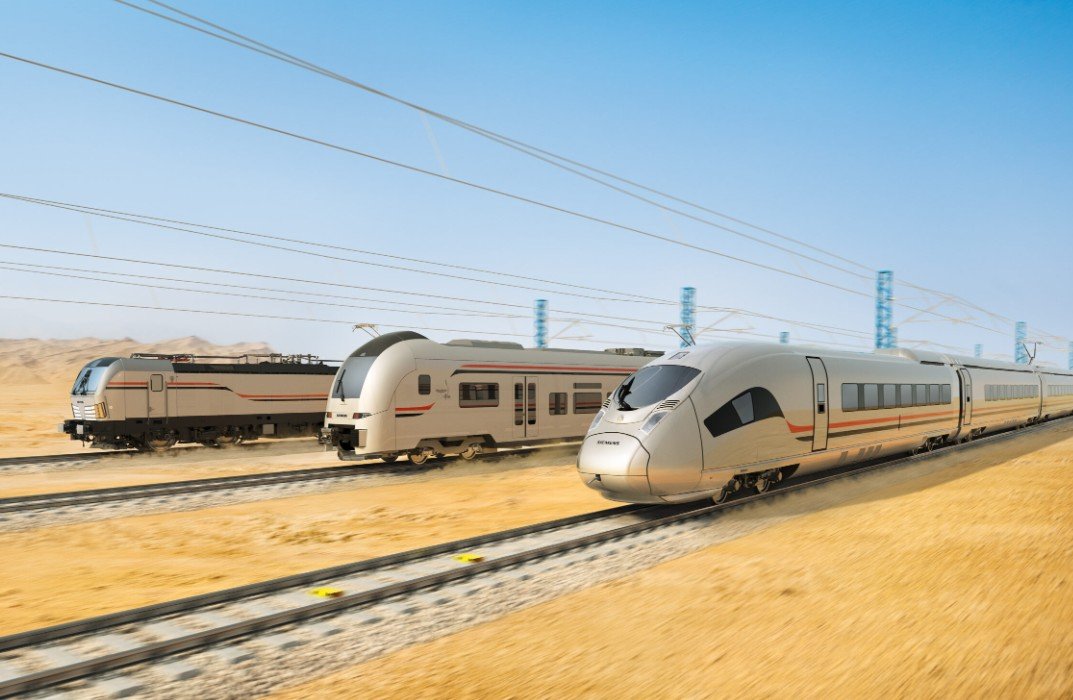
The biggest trains in the project, Siemens Velaro sets, will operate up to 230 kph. Regional services using Desiro HC trains will run at speeds of around 160 kph. Together, they create a layered transport system that feels more like Europe than what Egypt had even a few years ago.
There’s a useful bullet point here summarizing the rail network’s top speeds as discussed:
-
Velaro high-speed trains: 230 kph; Desiro HC regional trains: 160 kph.
It’s simple, but helps anchor the scale quickly for readers.
A First Look At The Trains That Will Define Egypt’s New Era of Rail
Siemens Mobility didn’t miss the chance to showcase the hardware powering the system.
Their Desiro HC regional train made its first operational test run in November.
The trial took place on the newly built tracks near the 6th of October Depot, west of Cairo. Engineers conducted system checks, acceleration tests, braking evaluations and basic diagnostics over small track loops to validate safety thresholds.
The Velaro high-speed model was also highlighted publicly, signaling its place as the star of the upcoming network.
A short line here.
These aren’t prototypes—they’re the actual trains Egypt will run soon.
The Desiro HC four-car set, though not the fastest in the lineup, gives the first tangible glimpse of Egypt’s future regional transport experience: wide windows, calmer suspension systems, interconnected coaches and improved accessibility.
And the Velaro? It’s a flagship that will turn Egypt into one of the first African nations operating a full-scale electric high-speed service across such long distances.
Consortium Structure Shows How Much Engineering Muscle Is Behind The Project
The magnitude of the project becomes clearer once you see who’s doing what.
Egypt didn’t outsource the entire system to one company—it built a consortium.
Siemens Mobility leads the group, with Orascom Construction and The Arab Contractors as major partners. This mix gives Egypt both global expertise and local implementation strength, which is essential when building something of this technical depth across deserts, valleys and urban zones.
Another single-sentence paragraph.
The contract covers “everything,” and that’s hardly an exaggeration.
Siemens Mobility is responsible for technology integration, signaling systems, rolling stock, electrification equipment, and the entire 15-year maintenance framework. They will deliver:
| Component | Quantity/Description |
|---|---|
| Velaro high-speed trains | 41 units |
| Desiro regional trains | 94 units |
| Vectron freight locomotives | 41 units |
| Signaling | Full network signaling package |
| Power supply | Complete electrification system |
| Maintenance | 15-year contract |
Meanwhile, Orascom and The Arab Contractors handle track-building, tunnel construction, bridges, overhead catenary and traction power substations.
This division means Egypt keeps a strong local footprint in physical infrastructure while relying on Siemens for the sophisticated tech ecosystem.
An in-between short paragraph to adjust rhythm.
It’s the kind of partnership that typically defines mega-scale transport projects worldwide.
Vision 2030: A Transport Blueprint Moving From Page to Reality
Egypt’s high-speed rail system is more than a transport upgrade—it’s the backbone of the country’s Vision 2030 agenda.
That agenda leans heavily on economic mobility, environmental shifts and infrastructure modernization.
The estimated cost hovers around $23 billion, positioning it as one of the largest national infrastructure investments in Africa.
The Mediterranean-to-Red Sea line is expected to open in 2027.
If timelines hold, the entire network should be completed in the early 2030s.
The idea is to connect industrial regions, ports, tourism hubs and historical sites in ways that reduce congestion, lower emissions and lift movement speeds across the entire country.
Another one-sentence bridge.
This isn’t just a rail project—it’s a re-mapping of national mobility.
For cities in Upper Egypt, new high-speed links may reshape job markets and shorten multi-hour trips into trips measured in minutes and hours instead of half-days.
Tourism routes—from Luxor and Aswan to Red Sea resorts—could see increased international interest because of more seamless inland travel.
And freight locomotives, often overlooked, will support Egypt’s push to streamline logistics and expand multimodal transport.
Early Tests Signal A Turning Point After Years of Planning
With Desiro HC units already on tracks for test runs, Egypt has crossed a symbolic threshold.
It’s no longer a plan on digital models; it’s steel on track.
The test happened west of Cairo on a fresh stretch of rail. Engineers monitored vibration levels, electric current flow and cabin stability.
One-sentence paragraph for tonal shift.
Seeing a modern train speeding through Egyptian terrain felt almost surreal to onlookers.
Early videos shared online show locals watching from the sidelines, some even filming with wide smiles as the train passed—a small but telling hint of public curiosity.
This phase matters because testing is where delays often happen in mega-projects. But this run suggests Egypt remains roughly on schedule.
The coming months will include:
-
System integration checks between Velaro and Desiro units.
-
Power grid stability testing across desert segments.
-
Overhead line inspection during simulated high-load operations.
All these elements must align before full-scale passenger operations begin.