Pakistan and Afghanistan met quietly in Riyadh for a high-stakes exchange, but the discussion ended almost as soon as it began, with neither side budging from long-held demands.
Saudi Mediation Meets Stubborn Positions
The talks were not publicly announced, and for several diplomats watching from the sidelines, the atmosphere felt tense before they even opened their notebooks.
Saudi Arabia hosted the meeting late Sunday night, offering a neutral room inside a government facility in Riyadh.
The Afghan Taliban delegation was led by Anas Haqqani and Rahmatullah Najib.
Pakistan included officials familiar with earlier Istanbul sessions, plus an added Foreign Office representative.
One short line here.
The conversation didn’t last long.
Unlike the longer Doha and Istanbul sittings, this one wrapped up quickly, leaving participants almost surprised by how short it was.
A brief paragraph: Pakistan repeated its demand that Kabul act decisively against TTP, BLA, and groups operating from inside Afghanistan.
The Taliban side repeated its own longstanding position with equal firmness.
And that was that — no movement, no draft, no joint line.
A single sentence paragraph: It felt more like a test of patience than a negotiation.
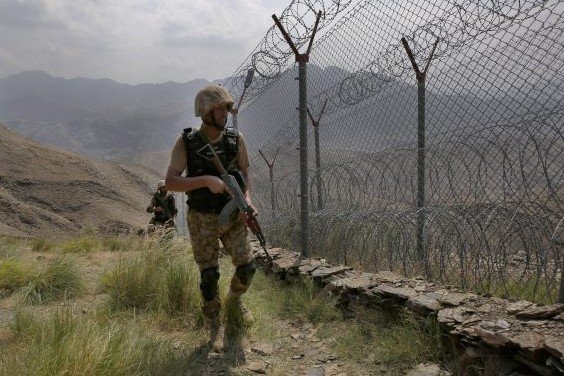
The Trade Angle That Went Nowhere
Sources said Saudi officials tried to create a small opening in the middle of the stalemate.
They encouraged both sides to keep channels open, even if progress felt frozen.
They also gently suggested that Pakistan could consider allowing bilateral trade to resume while counterterrorism discussions continue.
The suggestion lasted only moments before Islamabad dismissed it.
In the view of Pakistani officials, granting any goodwill gesture without “visible action” from Kabul would be politically impossible.
For Afghanistan’s side, linking trade to security conditions has always been a point of frustration.
Some participants expected Riyadh to push harder, but Saudi diplomats kept their approach quiet.
Officials familiar with the meeting said the Kingdom prefers behind-the-scenes facilitation rather than loud mediation.
In the middle of this section, the most practical point Saudi facilitators raised could be summarised simply:
• Restarting limited trade flows could reduce pressure while both sides handle security discussions — but neither side accepted the timing.
Turkiye–Qatar Track Stalls Again
The Riyadh initiative came at a time when the Turkiye-Qatar track had already lost momentum.
Earlier this year, Turkish President Recep Tayyip Erdogan signalled that a delegation would travel to Islamabad.
That visit still hasn’t materialised.
The earlier effort had produced a fragile ceasefire, one that Pakistan says fell apart because it depended on a lull in terrorist activity.
Afghan officials never agreed with that interpretation.
One sentence paragraph.
Both sides accuse the other of breaking the atmosphere needed for real progress.
Officials in Islamabad insist the TTP’s presence inside Afghanistan remains their core concern.
Afghan Taliban leaders argue that Pakistan exaggerates the issue for political pressure.
This disagreement has become the central block in nearly every round.
To show how the different mediation tracks compare, a short table circulated among analysts this week:
| Mediation Track | Status | Main Obstacle | Notes |
|---|---|---|---|
| Turkiye–Qatar | Stalled | Ceasefire collapsed | Delegation visit still pending |
| Riyadh | Active but inconclusive | Security demands | Saudis aim for quiet facilitation |
| Direct bilateral | Frozen | Lack of trust | No scheduled meetings |
Officials say none of the three tracks has produced sustained progress.
A small one-line paragraph.
And yet, none have been abandoned either.
Saudi Arabia Signals It Isn’t Walking Away
Saudi Arabia appears committed to staying involved, even after a meeting many sources described as “shorter than a coffee break.”
The Kingdom has been building diplomatic influence across several regional fronts, so stepping back now would look inconsistent.
Officials also believe stability between Pakistan and Afghanistan matters for energy projects, regional transport links, and wider Gulf interests.
A brief one-liner: Riyadh wants the next round to happen sooner rather than later.
Pakistan, however, is reluctant to move forward without what it calls “verifiable action.”
That phrase has become something of a mantra inside Islamabad’s diplomatic circles.
Afghan officials counter that Pakistan’s tone often overshadows opportunities for cooperation.
One sentence paragraph.
Trust is as thin as it’s been in months.
Some officials involved said the next meeting might again take place in Saudi Arabia.
Others suggested Istanbul could return as a venue if Turkiye and Qatar revive their involvement.
Nothing is confirmed.
What is clear is that both sides left Riyadh exactly where they arrived — dug into their own demands, unwilling to shift even slightly during the brief exchange.
Saudi diplomats privately admitted that they had hoped for at least a symbolic gesture, even something small like an agreement to form a technical committee.
That never surfaced.
A short paragraph: Still, officials insist this isn’t the end of the process.
They describe it as a stalled moment rather than a collapse.
And in diplomatic circles, stalled is often just another word for “waiting for someone to blink.”