
Egypt just marked a major milestone in preserving its ancient history. The Grand Egyptian Museum fully opened on November 1, 2025, showcasing over 100,000 artifacts, including the complete Tutankhamun collection for the first time ever near the Giza Pyramids in Cairo.
A Long Journey to Opening Day
Construction on this massive project started back in 2005, but delays from political changes, funding issues, and global events like the pandemic pushed back the timeline. Officials first announced plans in 1992, aiming to create the world’s largest museum focused on one civilization.
The museum cost about 1.2 billion dollars to build and spans over five million square feet. It sits just two kilometers from the famous pyramids, blending modern design with ancient wonders. A trial phase began in October 2024, letting visitors see some halls, but the full launch came with a gala event attended by world leaders.
This opening ties into Egypt’s push for tourism recovery after recent challenges. Visitor numbers to Cairo have risen by 15 percent this year, boosted by new attractions like this one.
Inside the Museum’s Key Highlights
Visitors enter through a grand lobby featuring a 36 foot tall statue of Ramesses the Second, an 82 ton granite figure that has watched over the site since 2006. The space uses natural light and open layouts to make history feel alive.
The star attraction is the Tutankhamun galleries, home to all 5,398 items from the boy king’s tomb discovered in 1922. These include the golden mask, chariots, and jewelry, displayed together for the first time.
Other sections cover Egypt’s history from predynastic times to the Coptic era. Curators organized artifacts by theme to help people understand daily life, religion, and rulers in ancient times.
Here are some must see items:
- The solar boat of Khufu, a 4,600 year old wooden vessel used in rituals.
- Statues of queens and pharaohs, many shown for the first time.
- Interactive exhibits in the children’s museum that teach about archaeology through fun activities.
Architecture and Modern Features
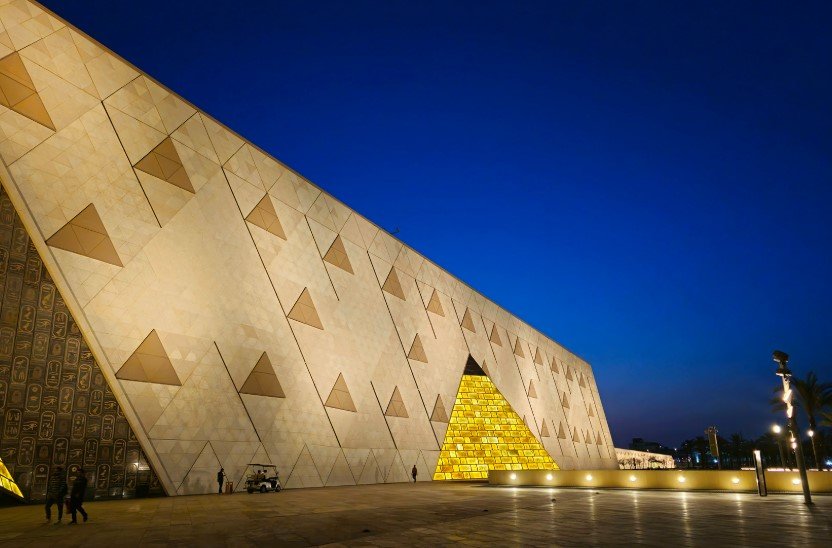
Irish firm Heneghan Peng Architects designed the building with a sloped roof that echoes the pyramids’ shape. The facade includes alabaster panels and glass, letting in soft light that highlights the displays.
Sustainability plays a big role too. The museum uses solar power and efficient systems, earning praise as Africa’s first green museum. It can handle up to 20,000 visitors daily, with features like a 3D cinema and restaurants offering views of the pyramids.
A restoration center on site is the largest in the Middle East, where experts work on preserving items. This setup ensures artifacts stay in top condition for future generations.
Impact on Tourism and Culture
Egypt expects a big boost in visitors thanks to this opening. Airlines like EgyptAir are running deals, such as 40 percent off flights to Cairo until early 2026, to draw more travelers.
The museum not only houses treasures but also sparks talks about returning artifacts from abroad. Groups are calling for items like the Rosetta Stone to come back, adding to global discussions on cultural heritage.
Local experts say this will create jobs and support education. Schools plan field trips, and online virtual tours let people worldwide explore without traveling.
| Timeline of Key Events | Date | Details |
|---|---|---|
| Project Announcement | 1992 | Plans revealed for a new museum near Giza. |
| Construction Start | 2005 | Building begins on the massive site. |
| First Artifact Moved | 2006 | Ramesses II statue placed in lobby. |
| Trial Opening | October 2024 | Limited halls open to the public. |
| Full Opening Gala | November 1, 2025 | Official ceremony with leaders. |
| Public Access Begins | November 4, 2025 | Doors open for all visitors. |
Challenges Overcome and Future Plans
Building faced hurdles like the 2011 revolution and nearby conflicts, but teams pushed through. The result is a space that honors Egypt’s past while looking to the future.
Looking ahead, curators plan rotating exhibits and partnerships with global museums. This could include loans of artifacts for special shows, keeping the content fresh.
Experts predict the museum will draw millions in its first year, helping Egypt’s economy. It stands as a symbol of resilience and pride for the nation.
What do you think about this historic opening? Share your thoughts in the comments below or spread the word by sharing this article with friends who love history and travel.
