
Hamas has strongly condemned Israel’s recent airstrikes in Gaza, calling them a blatant violation of a fragile ceasefire deal brokered by the United States. The attacks, which occurred on October 29, 2025, killed at least 30 people and injured dozens more, escalating tensions just weeks after the agreement aimed to halt over two years of conflict in the region.
This latest flare-up follows accusations from both sides, with Israel claiming Hamas fired on its troops in Rafah, while Hamas denies any involvement and points to repeated Israeli breaches. The ceasefire, part of a 20-point plan pushed by U.S. President Donald Trump, was meant to bring peace, but ongoing disputes over hostage remains and border crossings have strained it from the start.
Background of the Ceasefire Agreement
The ceasefire took effect earlier in October 2025, marking a rare pause in the deadly violence that has gripped Gaza since 2023. Brokered in Egypt with input from Qatar, Turkey, and the U.S., the deal included provisions for exchanging hostages, allowing humanitarian aid, and halting military actions.
Experts note that this agreement builds on previous failed attempts, influenced by shifting global politics, including Trump’s return to office. The plan’s first phase focused on immediate de-escalation, but enforcement has proven challenging amid deep mistrust.
Key elements of the deal include:
- Release of specified hostages and remains.
- Opening of border crossings like Rafah for aid.
- Cessation of all hostilities, monitored by international guarantors.
Despite initial optimism, reports indicate over 100 violations in the first few weeks, mostly minor incidents but building to this major clash.
The agreement’s fragility reflects broader issues in the Israeli-Palestinian conflict, where past truces have collapsed under similar pressures.
Details of the Recent Airstrikes
Israeli forces launched multiple airstrikes across Gaza on October 29, 2025, targeting areas in Gaza City, Khan Younis, and Bureij. Local health officials reported at least 30 deaths, including civilians, with hospitals overwhelmed by the wounded.
The strikes came hours after Israel accused Hamas of attacking its soldiers near Rafah with sniper fire and anti-tank missiles. Prime Minister Benjamin Netanyahu ordered “powerful strikes” in response, vowing to protect Israeli troops.
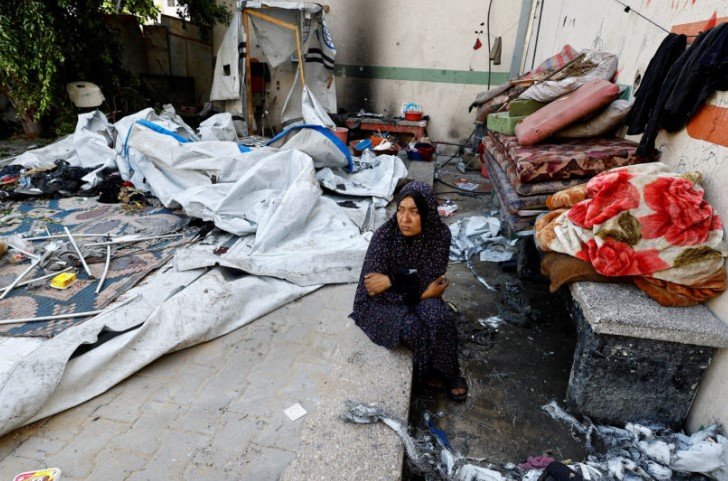
Eyewitness accounts describe intense bombing that damaged homes and infrastructure, adding to Gaza’s already dire humanitarian crisis. The attacks disrupted aid deliveries, leaving thousands without essential supplies.
This incident follows a pattern of escalation, with Israel claiming it acted in self-defense after ceasefire breaches. Casualty figures from Gaza’s civil defense agency highlight the human cost, with women and children among the victims.
Hamas’s Strong Denial and Accusations
Hamas issued a swift statement rejecting Israel’s claims, stating it had no connection to the Rafah incident and reaffirming its commitment to the truce. The group described the airstrikes as “criminal bombing” and part of a series of violations by Israel.
In its response, Hamas highlighted Israel’s closure of the Rafah crossing, which has blocked vital aid and medical evacuations. They argue this obstruction proves Israel’s intent to sabotage the deal.
Hamas called on mediators like Egypt, Qatar, Turkey, and the U.S. to pressure Israel and enforce the agreement’s terms. The movement emphasized that such actions endanger civilians and undermine peace efforts.
This denial comes amid reports of internal Hamas discussions on maintaining the ceasefire, despite provocations.
Analysts suggest Hamas’s position aims to rally international support, portraying Israel as the aggressor in this renewed conflict.
Israel’s Position and Justifications
Israel maintains that Hamas violated the ceasefire first by attacking troops in Rafah and delaying the handover of hostage remains. Officials accused Hamas of staging discoveries of bodies to manipulate the process.
Netanyahu’s office stated the strikes were necessary to deter further aggression and ensure soldier safety. The Israeli military released details of the alleged attack, including claims of sniper fire that wounded personnel.
This stance aligns with Israel’s broader security concerns, especially after the October 7, 2023, attacks that sparked the war. Recent events, like the recovery of misidentified remains, have fueled distrust.
Israel has urged international partners to hold Hamas accountable, warning that unchecked violations could unravel the entire deal.
International Reactions and Broader Impact
Global leaders expressed concern over the escalation, with U.S. officials noting the ceasefire remains intact despite the skirmishes. Vice President JD Vance commented that the deal is holding, but warned of full support for Israel if Hamas continues breaches.
Egypt and Qatar, key mediators, called for restraint and immediate talks to salvage the agreement. The United Nations highlighted the risk to civilians, urging both sides to comply.
The strikes have drawn criticism from human rights groups, who point to the disproportionate impact on Gaza’s population.
| Key International Responses | Details |
|---|---|
| United States | Affirms ceasefire is still in place; supports Israel against violations. |
| Egypt | Condemns attacks and pushes for renewed negotiations. |
| United Nations | Warns of humanitarian crisis; calls for aid access. |
| European Union | Expresses alarm over civilian deaths and urges de-escalation. |
These reactions underscore the deal’s importance in preventing a wider regional conflict.
Humanitarian Toll and Future Prospects
The airstrikes have worsened Gaza’s humanitarian situation, where over 68,500 people have died since the war began in 2023. Hospitals report shortages of medicine, and displaced families face increased hardship.
Experts predict that without swift intervention, the ceasefire could collapse entirely, leading to more violence. Logical reasoning suggests both sides benefit from peace, but historical patterns show truces often fail due to mutual accusations.
Recent events, like the March 2025 ceasefire breakdown that killed hundreds, serve as a stark reminder of the stakes. Aid organizations estimate that full compliance could save thousands of lives in the coming months.
Looking ahead, renewed talks in the next few days might stabilize the situation, but deep-rooted issues like settlements and security remain unresolved.
As this story develops, readers are encouraged to share their thoughts in the comments and spread the article to raise awareness about the ongoing crisis in Gaza.
